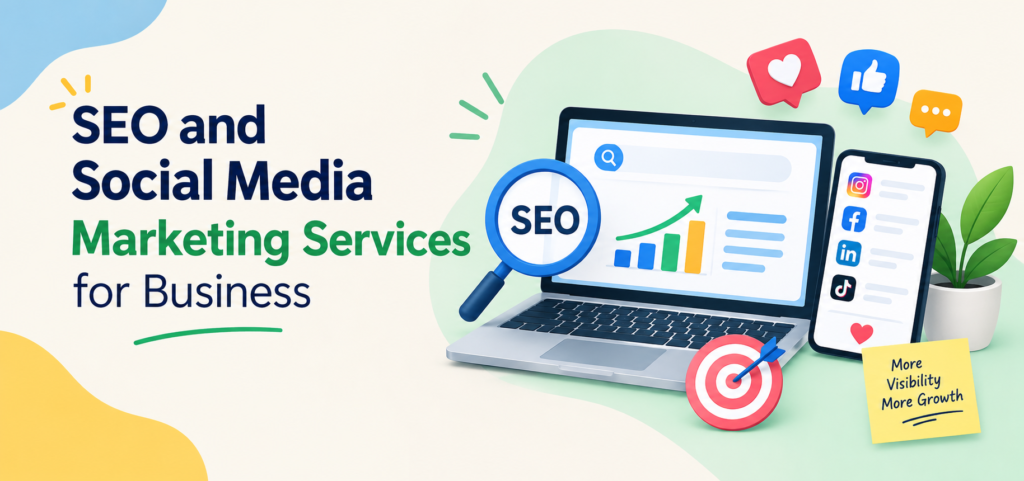
SEO and social media marketing services help businesses reach the right audience, build brand awareness, and attract potential customers online. SEO helps people discover a website through search engines, while social media gives businesses a way to share content, connect with customers, and build relationships. When both channels support the same business goals, they can work together to create a stronger digital presence. However, success requires more than publishing regular posts or adding keywords to a website. Businesses need useful content, a clear strategy, and a way to measure results. This guide explains how SEO and social media marketing work together, which strategies matter most, and how to choose the right services for your business.
What Are SEO and Social Media Marketing Services?
SEO and social media marketing services focus on different channels, but both help businesses connect with their target audience.
Search engine optimization (SEO) improves a website so that search engines can understand its content and show relevant pages to people searching for related information. It includes keyword research, on-page optimization, technical improvements, content creation, and link building.
Social media marketing focuses on platforms such as Facebook, Instagram, LinkedIn, and TikTok. It involves creating content, managing accounts, engaging with followers, and running paid campaigns when appropriate.
For example, a company selling skincare products might publish a blog about choosing a moisturizer for dry skin. SEO helps potential customers find that article through Google, while social media helps the company share it with people interested in skincare.
Together, these channels give businesses more ways to introduce their products or services to potential customers.
How SEO and Social Media Marketing Work Together
SEO and social media marketing are most effective when they support a shared content strategy. Instead of treating them as separate activities, businesses can use insights from one channel to improve the other.
Use Keyword Research to Understand Your Audience
Keyword research reveals the questions and phrases people use when looking for information online. These insights can guide website content and social media posts.
For example, if people frequently search for ways to improve website speed, a business could publish a detailed blog explaining the process. It could then turn the main points into a LinkedIn post, an Instagram carousel, or a short educational video.
This approach helps businesses reuse useful information without publishing exactly the same content everywhere.
Share Website Content on Social Media
Publishing a blog is only one part of content marketing. Sharing it on relevant social platforms can introduce the article to people who may not have discovered it through search engines.
A useful social media post should explain why the topic matters and give people a reason to read more. Simply posting a link without context may not encourage much engagement.
Businesses can also use comments and questions from their audience to identify topics for future articles. This creates a practical connection between content distribution and content planning.
Keep Your Brand Consistent Across Channels
Your website and social profiles should communicate a consistent message. Use similar descriptions of your services, maintain a recognizable brand identity, and make sure the information you share is accurate.
Businesses looking to improve their online presence can explore search engine optimization services to understand how SEO fits into a broader digital marketing strategy.
One important distinction is that social media likes and shares are not direct Google ranking factors. However, social media activity can help more people discover your content, which may lead to website visits, brand searches, and relevant editorial backlinks over time.
Benefits of SEO and Social Media Marketing Services
Combining SEO with social media marketing can help businesses build a more consistent online presence. The results depend on the quality of the strategy, the audience, and how well each channel supports business objectives.
Increased Online Visibility
SEO can help a business appear for relevant searches, while social media creates additional opportunities for people to encounter its content.
For instance, a digital marketing agency might attract visitors through a blog about keyword research and reach another audience by sharing practical SEO tips on LinkedIn.
More Relevant Website Traffic
The goal is not simply to attract more visitors. Businesses need people who are genuinely interested in their services or products.
SEO targets search intent, while social media content can reach people based on their interests, professional roles, or interactions with a brand. Together, these channels can bring potential customers to relevant pages on a website.
Stronger Customer Relationships
Social media allows businesses to answer questions, respond to feedback, and understand customer concerns. SEO content can support these conversations by providing detailed answers to common questions.
For example, a business could answer a frequently asked question in a social media post and link to a more detailed guide on its website.
Better Content Opportunities
Content created for one channel can often inspire material for another. A successful blog post may become several social media updates, while recurring audience questions may suggest new blog topics.
This helps businesses get more value from their content efforts without relying on constant new ideas.
Essential SEO and Social Media Marketing Strategies
A successful strategy should reflect your business goals, available resources, and audience preferences. The following practices can help keep your efforts focused.
Create Helpful, Search-Focused Content
Start by identifying the questions your audience wants answered. Use keyword research to understand relevant search terms, then create pages and articles that provide clear, useful information.
Avoid writing solely to include keywords. Content should address the reader’s problem, explain the topic accurately, and offer practical next steps.
Google’s SEO Starter Guide provides useful guidance on helping search engines understand your website and its content.
Choose Social Media Platforms Strategically
You do not need to be active on every platform. Focus on the channels your potential customers actually use.
A B2B company may benefit from LinkedIn because it can connect the business with professionals and decision-makers. A fashion or beauty brand may find Instagram and TikTok more suitable for visual content.
Businesses that need support with planning, content creation, and campaign management can explore social media marketing services to see how professional support may fit their goals.
Optimize Website Pages for Visitors
A social media post may attract someone to your website, but the landing page still needs to provide a good experience.
Make sure pages load properly, work on mobile devices, explain your services clearly, and include relevant calls to action. Add descriptive page titles, useful headings, and internal links where they help visitors discover related information.
A clear contact form or service page can also make it easier for interested visitors to take the next step.
Maintain a Consistent Publishing Schedule
Consistency helps businesses keep their content organized and maintain communication with their audience. However, publishing frequently is not a substitute for quality.
Create a realistic content calendar that includes blog posts, social media updates, and opportunities to repurpose existing material. Review performance regularly and adjust the schedule according to what your audience finds useful.
How to Measure SEO and Social Media Performance
Tracking results helps businesses understand which activities are contributing to their goals. The most useful metrics depend on whether the objective is brand awareness, website traffic, leads, or sales.
For SEO, monitor organic clicks, impressions, relevant keyword performance, and conversions. Google Search Console can show how a website performs in Google Search, while website analytics can help explain what visitors do after arriving.
For social media, review reach, engagement, profile visits, referral traffic, and conversions where tracking is available.
Consider a company that receives many social media likes but very few inquiries. It may need clearer calls to action or content that better matches its customers’ needs. Another company may receive steady organic traffic but few leads, suggesting that its landing pages or service descriptions need improvement.
Reviewing both channels together can reveal where the customer journey needs attention. Avoid judging success by follower counts or rankings alone; connect the metrics to actual business objectives.
Common Mistakes to Avoid
Even a well-planned digital marketing strategy can struggle when businesses focus on activity rather than results.
One common mistake is expecting social media engagement to improve Google rankings directly. Social platforms can help distribute content, but likes and shares do not guarantee better organic rankings.
Another mistake is targeting keywords without understanding search intent. A page may attract visitors but still fail to generate leads if it does not answer their questions or match what they want.
Businesses should also avoid publishing identical content across every platform without adapting it to each audience. A detailed blog introduction may work well on a website, while a shorter, more conversational version may suit social media better.
Finally, do not ignore measurement. Without reviewing traffic, engagement, and conversions, it becomes difficult to identify what is working and where improvements are needed.
How to Choose SEO and Social Media Marketing Services
The right provider should understand your business goals and explain how its work will support them. Before choosing an agency or freelancer, consider the following factors.
First, review the provider’s experience, relevant examples, and approach to keyword research, content, and social media management. Ask how the strategy will be tailored to your audience rather than relying on a standard package.
Next, discuss reporting. A reliable provider should explain which metrics it will track, how often it will report results, and how it will use the data to improve performance. Be cautious of guaranteed rankings or promises of immediate results.
It is also important to understand the scope of work. Some providers focus mainly on SEO, while others offer social media management, paid advertising, content creation, or a combination of services.
Before making a decision, compare social media marketing services and costs to understand the types of services available and what different options may include.
Choose a provider that communicates clearly, sets realistic expectations, and can connect its work to measurable business goals.
Frequently Asked Questions
1. What is the difference between SEO and social media marketing?
SEO helps people discover website pages through search engines. Social media marketing helps businesses reach and engage audiences through social platforms. Both can support brand awareness and customer acquisition.
2. Does social media marketing improve SEO rankings?
Social media likes and shares are not direct Google ranking factors. However, social media can increase content visibility and potentially lead to website visits, brand awareness, and relevant backlinks.
3. Can small businesses benefit from SEO and social media marketing services?
Yes. Small businesses can use SEO to target relevant searches and social media to build relationships with potential customers. Starting with a few well-chosen keywords and suitable platforms can make the work more manageable.
4. How long does it take to see results?
The timeline varies according to competition, website condition, content quality, budget, and consistency. Social engagement may appear sooner, while meaningful SEO improvements often take several months. No provider can guarantee a specific ranking or timeline.
5. Should a business invest in SEO or social media first?
The best starting point depends on the business and its goals. If people are already searching for its products or services, SEO may be a priority. If the business needs to build awareness or connect with a specific community, social media may deserve more attention. Many businesses benefit from combining both over time.
Conclusion
SEO and social media marketing services can help businesses build visibility, reach relevant audiences, and create stronger connections with potential customers. SEO supports long-term discoverability through search, while social media provides opportunities to share content and engage directly with people.
The best approach is not to chase every platform or keyword. Instead, understand your audience, publish useful content, choose channels that fit your goals, and track the results that matter to your business. With a clear strategy and regular improvements, both channels can contribute to sustainable digital growth.