Understanding how internal linking improves organic traffic can help businesses get more value from their existing website content. Publishing useful articles is important, but those articles also need meaningful connections. Without a clear linking structure, visitors may struggle to find related information, and important pages may receive less attention than they deserve. At Leemjaz, internal linking is an important part of building a well-organized organic SEO strategy. It connects relevant blog posts with service pages, helps visitors explore related topics, and creates better pathways through the website. When businesses use internal links strategically, they can improve content discovery, strengthen website navigation, and support their long-term search visibility.
What Is Internal Linking and Why Does It Matter?
Internal linking means connecting two or more pages within the same website through clickable hyperlinks.
For example, a visitor reading an article about keyword research might also want to understand content optimization or technical SEO. A relevant internal link takes that visitor directly to another useful resource.
Internal links serve two important purposes.
First, they help visitors discover information without repeatedly returning to search engines. Second, they provide search engines with pathways to discover pages and understand how different sections of a website relate to one another.
For a digital marketing agency like Leemjaz, this creates opportunities to connect educational articles with relevant services.
A useful internal linking structure generally includes service pages, pillar content, supporting blog posts, and resource pages. Each page should have a clear purpose, and its links should help visitors find the next relevant piece of information.
How Internal Linking Improves Organic Traffic for Websites
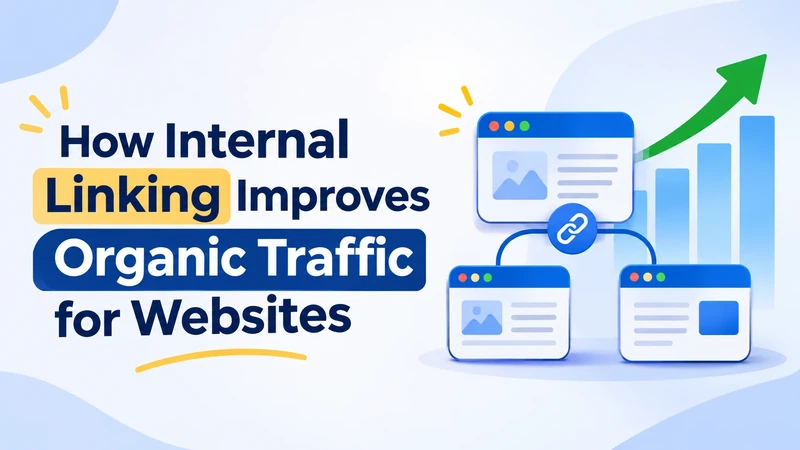
Internal links support organic search performance in several ways. Their value comes from making important content easier to discover and establishing meaningful connections between related pages.
1. Helps Google Discover Important Website Pages
Search engines use links to discover URLs and understand website structure.
When an established blog post links to a newly published article, it creates another pathway through which search engine crawlers can discover that content.
Consider a business that publishes an article about technical SEO but does not connect it with any existing resources. Visitors may find it difficult to reach that article through the website’s navigation.
Adding relevant internal links from related pages creates more opportunities for discovery.
This is particularly useful for websites that publish content regularly. Without a consistent linking strategy, older articles can become disconnected from newer resources.
However, internal links do not guarantee indexing. Search engines also consider page accessibility, content quality, and other technical factors.
2. Distributes Link Equity to Relevant Pages
Link equity refers to the value associated with links between web pages.
Suppose an established article attracts backlinks from relevant industry websites. That article may become an important resource within the website.
Connecting it with other relevant pages creates additional pathways for visitors and search engines to discover those resources.
For example, an article about improving website visibility could naturally link to a relevant SEO service page.
This creates a useful relationship between informational content and commercial content.
Leemjaz can apply this approach by connecting educational articles with its organic SEO services.
The important consideration is relevance. Adding links simply because one page has more backlinks does not automatically make every destination a suitable choice.
3. Improves Website Navigation and User Experience
Visitors rarely find everything they need on a single page.
Someone reading an article about organic traffic might also want to learn about keyword selection, content optimization, or website performance.
Relevant internal links make it easier to explore these subjects without interrupting the browsing experience.
For example, a small business owner researching search visibility could continue reading Leemjaz’s guide on getting organic traffic.
This connection provides additional information while keeping the visitor within the same website.
For businesses, better navigation can also make important services easier to discover.
However, links should always support the discussion. Too many unrelated hyperlinks can distract readers and make content difficult to follow.
4. Builds Stronger Topic Clusters
Publishing several articles about related subjects can help a website develop comprehensive topic coverage.
However, those articles should not exist as disconnected resources.
Topic clusters provide a practical way to organize related content around a central subject.
For example, a digital marketing agency might create a main resource about organic SEO and support it with articles covering:
- Keyword research
- Technical SEO
- Internal linking
- Content optimization
- On-page SEO
- Link building
The supporting articles can link to the main resource when appropriate. The main resource can also direct visitors to more detailed explanations.
This structure helps search engines understand relationships between pages while making related information easier for readers to access.
5. Helps Important Service Pages Gain Visibility
Blog articles often attract visitors who are researching a particular problem. Service pages, on the other hand, explain how a business can help solve that problem.
Connecting these pages creates a natural path between information and potential business enquiries.
For example, a visitor reading about search engine visibility might eventually need professional SEO assistance.
A contextual link within the article can introduce the relevant service without turning the entire discussion into a sales pitch.
For Leemjaz, this means connecting educational content with relevant service pages whenever the relationship genuinely benefits the reader.
6. Reduces Orphan Pages
An orphan page is a page that has no internal links pointing toward it.
These pages can remain difficult to discover through normal website navigation, even when they contain useful information.
Businesses should regularly review their website structure to identify important pages that lack relevant incoming links.
A website crawler can help identify these pages by comparing discovered URLs with the site’s sitemap.
Once identified, review existing articles and add links where the destination provides useful additional information.
The priority should be important pages that support the website’s content strategy and business objectives.
How Leemjaz Can Build an Effective Internal Linking Strategy
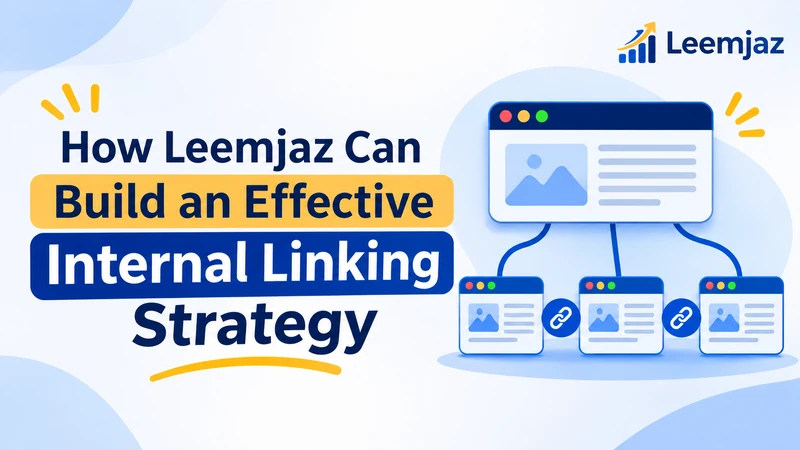
An effective internal linking strategy requires more than adding hyperlinks to random paragraphs. Businesses need to understand their content, audience, and important website pages.
At Leemjaz, internal linking fits within a wider organic search strategy that considers keyword research, content organization, and on-page optimization.
1. Identify Important Pages First
Start by reviewing your website and identifying pages that deserve more attention.
These might include:
- Main service pages
- Important pillar articles
- High-performing blog posts
- Supporting educational resources
- Pages that generate valuable enquiries
Google Search Console can help identify pages receiving organic impressions and clicks.
Prioritize pages based on their relevance and business value rather than simply choosing URLs with the highest search volume.
2. Find Relevant Linking Opportunities
After identifying important pages, review existing content for suitable linking opportunities.
For example, an article discussing organic search performance might naturally reference a resource about content optimization.
You can use Google’s site search operator to find related content:
site:leemjaz.com SEO
Replace SEO with your target topic to explore other relevant pages.
Before adding a link, read the destination page. Make sure it provides information that genuinely supports the paragraph.
3. Write Natural and Descriptive Anchor Text
Anchor text is the clickable wording that takes visitors to another page.
It tells readers what they can expect after clicking a link.
For example, instead of writing “click here,” use descriptive wording such as “improve your content strategy.”
Avoid repeating the same exact-match keyword in every internal link. Natural variations are easier to read and provide useful context.
Google also recommends descriptive anchor text and crawlable links in its official link best practices.
4. Connect Pillar Pages With Supporting Articles
A pillar page covers a broad subject, while supporting articles answer more specific questions.
Connecting these resources helps visitors explore a topic in greater depth.
For instance, a main organic SEO guide could link to articles about keyword research, internal linking, and content optimization.
Supporting articles should also link back to the main resource when it makes sense.
This approach creates a logical website structure and helps prevent important content from becoming isolated.
5. Connect Informational Articles With Relevant Services
Informational articles and service pages have different purposes, but they can work together.
A visitor researching SEO problems might eventually need professional support.
A naturally placed service link can help that visitor explore available solutions.
For example, an article about improving organic search visibility could direct readers toward a relevant SEO service page.
The anchor text should explain the destination clearly, and the link should appear where it provides genuine value.
6. Audit and Update Internal Links Regularly
Internal linking needs ongoing attention as a website grows.
New articles are published, older URLs change, and some resources become outdated.
A regular audit should examine:
- Broken internal links
- Orphan pages
- Unnecessary redirects
- Irrelevant anchor text
- Important pages with insufficient internal connections
- Links pointing to outdated resources
Reviewing these issues helps businesses maintain a useful website structure and prevents valuable content from becoming difficult to discover.
Common Internal Linking Mistakes That Businesses Should Avoid
Even websites with many internal links can have structural problems.
One common mistake is linking unrelated pages. Every link should have a clear connection with the surrounding paragraph.
Another problem is excessive exact-match anchor text. Repeating identical keyword phrases across multiple links can make content sound unnatural.
Some businesses also overlook their important service pages. They connect blog posts with one another but fail to introduce relevant services to visitors who may need them.
Broken links create another problem because they prevent visitors from reaching the intended information.
Finally, adding links simply to increase their number is not a useful strategy. There is no universal number of internal links that every article must contain.
Focus on relevance, destination quality, and the reader’s experience.
How to Measure Whether Internal Linking Improves Organic Traffic
Internal linking should be evaluated through actual website performance rather than assumptions.
Google Search Console and Google Analytics 4 provide useful information for measuring changes.
Monitor Organic Clicks and Impressions
Google Search Console shows how often your pages appear in search results and how many clicks they receive.
Compare the performance of important pages before and after making substantial internal linking improvements.
Also review their search queries to understand whether the pages attract relevant visitors.
Review Page Discovery and Indexing
Check whether important URLs are accessible and eligible for indexing.
The Pages report in Google Search Console can help identify indexing problems that require further investigation.
Internal links can support discovery, but they cannot resolve every technical SEO issue.
Analyze Organic Landing Pages
Google Analytics 4 helps businesses understand which pages attract visitors through organic search.
Review how visitors interact with these pages and whether they explore relevant resources.
This information can reveal opportunities to improve content structure and navigation.
Track Leads and Conversions
Organic traffic is useful, but businesses should also understand whether visitors take meaningful actions.
Monitor contact form submissions, consultation requests, and service enquiries.
For Leemjaz, this broader approach helps connect organic search performance with business objectives rather than focusing on traffic numbers alone.
Keep a record of updated pages, added links, and implementation dates. This makes performance comparisons more meaningful.
How Internal Linking Supports AI Overviews and LLM Visibility
People increasingly use AI-powered search experiences to discover information, compare solutions, and find answers.
This makes clear website organization and useful content particularly important.
Internal links can help establish relationships between related resources. Descriptive anchor text also provides context about the information available on linked pages.
However, internal linking alone cannot guarantee visibility in Google AI Overviews or citations in AI platforms.
Leemjaz can support its wider search strategy through several content practices.
Answer questions clearly: Begin important sections with direct explanations before adding supporting details.
Use meaningful headings: Organize content around specific subjects and questions.
Provide practical examples: Explain how SEO techniques work in real business situations.
Connect related resources: Link to supporting articles when they provide additional information.
Maintain accurate information: Review outdated details and avoid unsupported claims.
Create original content: Add useful explanations, relevant examples, and insights rather than repeating information already available everywhere.
These practices help create a more useful content library that serves readers and provides clearer context for search systems.
Why Choose Leemjaz for Organic SEO Growth?
Internal linking works best when it supports a wider SEO strategy.
Publishing articles, improving website structure, researching keywords, and optimizing existing content should not be treated as completely separate activities.
Leemjaz approaches organic SEO with these elements working together.
The process begins with understanding a business’s audience, existing website performance, and marketing objectives.
From there, relevant opportunities can be identified through keyword research, content analysis, technical improvements, and website structure reviews.
For example, an article may already attract search impressions but provide no clear route to related resources. Improving its internal links could make it easier for visitors to discover relevant information.
Similarly, an important service page may benefit from contextual links from educational articles that discuss the same subject.
The objective is to improve website usefulness while supporting relevant organic search opportunities.
Businesses looking to strengthen their online visibility can explore Leemjaz’s organic SEO approach to understand how these activities fit into a broader strategy.
Conclusion
Internal linking is an important part of creating a website that visitors and search engines can understand.
It helps search engines discover pages, connects related topics, supports link equity distribution, and improves website navigation.
However, effective internal linking is not about adding as many hyperlinks as possible. It is about understanding which pages matter, how they relate to one another, and where visitors need additional information.
For Leemjaz, a structured approach creates opportunities to connect educational blog posts with relevant services and supporting resources.
Businesses should regularly review their website structure, use descriptive anchor text, fix broken links, and connect pages according to user intent.
When internal links support useful content and a clear website structure, they become a valuable part of a sustainable organic search strategy.
Frequently Asked Questions
1. How does internal linking improve organic traffic?
Internal linking helps search engines discover pages and understand their relationships. It also improves website navigation and creates more opportunities for visitors to explore relevant content.
2. How many internal links should an SEO article have?
There is no fixed number of internal links required for every article. Add links when they provide useful context and help readers discover related resources.
3. Do internal links help improve Google rankings?
Internal links help Google discover pages and understand website structure. They can support SEO performance, but rankings also depend on content quality, competition, search intent, and other factors.
4. What is the difference between internal and external links?
Internal links connect pages within the same website, while external links point to pages on other websites. Both help visitors access relevant information.
5. How often should I audit internal links?
Review internal links regularly, especially after publishing new content, updating URLs, or restructuring your website. A quarterly review is a useful starting point for many websites.