Getting visitors to a website is important, but attracting the right visitors matters even more. A page may contain useful information and target a popular keyword, yet still struggle to rank if it does not answer what people are actually looking for. This is where understanding how search intent affects organic rankings becomes essential. Search intent explains the reason behind a person’s query and helps businesses create content that matches their needs. When a page provides the right information in the right format, it becomes more useful to visitors. As a result, businesses can build stronger content strategies, improve user experience, and attract more relevant organic traffic.
What Is Search Intent in SEO?
Search intent, also known as user intent, refers to the purpose behind a search query. In simple terms, it explains what someone hopes to find when they enter a phrase into Google.
For example, a person searching for “what is technical SEO” probably wants a clear explanation. However, someone searching for “technical SEO services” may be looking for a company that can provide professional support.
Although both searches relate to technical SEO, their purposes are different. Therefore, creating one page for both queries may not satisfy either audience completely.
Understanding search intent helps businesses decide what type of content to create, which questions to answer, and what information to highlight. It also makes keyword research more meaningful because the goal is not simply to include popular terms. Instead, the goal is to understand what users expect to find.
How Search Intent Affects Organic Rankings
Search intent affects organic rankings because Google aims to show results that are useful and relevant to a searcher’s needs. When a page matches the purpose of a query, it has a better chance of satisfying the visitor.Creating content that matches user expectations is also an important part of learning how to improve organic search rankings.
However, keyword relevance alone does not guarantee strong rankings. The content must also deliver the information or experience that users expect.
Content relevance: First, search intent helps determine whether a page answers the actual query. For instance, an informational search needs a helpful explanation rather than a sales-focused landing page.
Better user experience: When visitors find the information they need, they can navigate the page more easily. Clear headings, useful examples, and relevant links also make the experience smoother.
More qualified traffic: In addition, matching intent can attract visitors who are genuinely interested in a business’s services. This is particularly important for companies that want leads rather than traffic alone.
Stronger content strategy: Finally, understanding intent helps businesses avoid publishing multiple pages that serve the same purpose. Instead, they can create focused pages for different stages of the customer journey.
It is worth remembering that search intent is one part of SEO. Technical performance, content quality, competition, website authority, and other ranking systems also influence search visibility.
Four Main Types of Search Intent
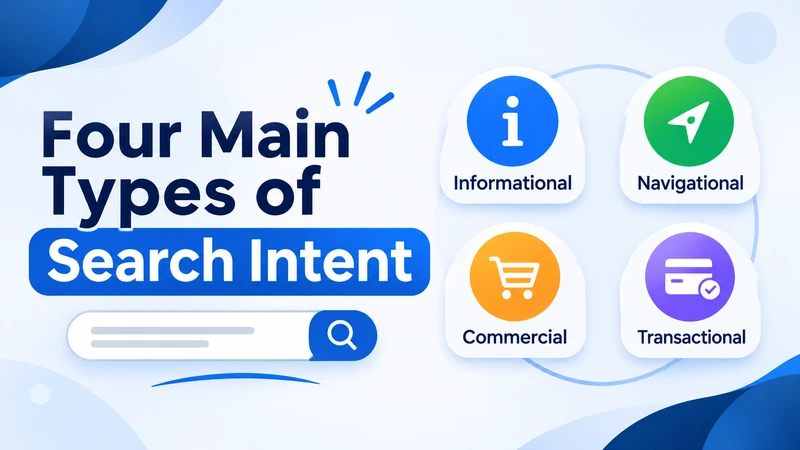
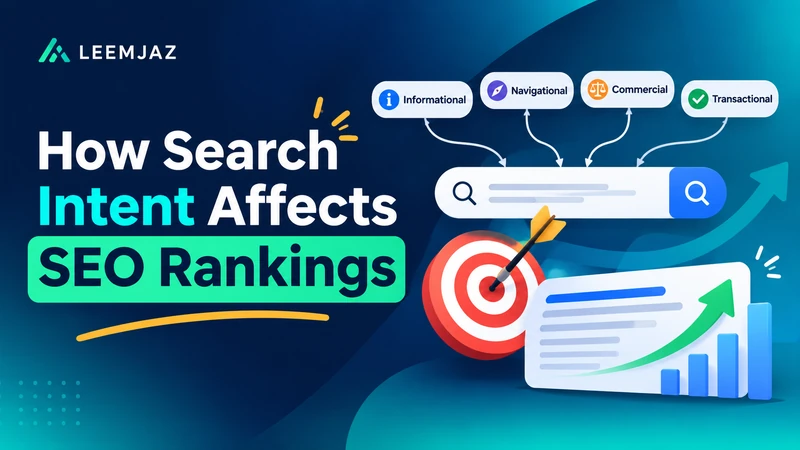
Before creating an SEO page, it is useful to identify which type of intent a keyword represents. Most searches fall into four main categories.
Informational Intent
People with informational intent want to learn something or find an answer. For example, searches such as “how does SEO work?” and “what is keyword research?” show that users are looking for explanations.
For these queries, businesses should publish informative blog posts, guides, tutorials, and educational resources. More importantly, the content should answer the main question clearly before introducing additional details.
Navigational Intent
Navigational searches happen when someone wants to visit a particular website or page. For example, a person searching for “Leemjaz website” is likely trying to find the brand online.
In this case, a clear website structure, recognizable brand information, and accessible pages can help users reach their intended destination.
Commercial Investigation Intent
Sometimes, people research different options before making a decision. Searches such as “best SEO agency for small businesses” and “SEO services comparison” indicate commercial investigation.
Therefore, comparison articles, service explanations, case studies, and detailed guides can help users evaluate their choices. Businesses should provide useful information instead of relying only on promotional language.
Transactional Intent
Transactional searches show that someone is ready to take action. For example, “hire an SEO agency” or “buy SEO services” suggests that the searcher may be prepared to contact a provider.
For these queries, service pages with clear descriptions, pricing information where available, and straightforward contact options are often more appropriate than general blog posts.
How to Identify Search Intent Before Writing Content
Choosing a keyword is only the first step. Before writing, businesses should examine the search results to understand what Google is already showing for that query.
Start by searching the target keyword in Google. Then, review the top-ranking pages and look for patterns. If most results are detailed guides, the query probably has informational intent. On the other hand, if service pages dominate the results, users may be looking for a provider.
Next, examine the headings, questions, and topics covered by competing pages. This can reveal what readers expect to learn and which useful details may be missing.
Related searches and Google’s People Also Ask section can also provide ideas for supporting questions. In addition, keyword research tools can help identify related phrases and variations worth including.
Finally, consider the user’s position in the customer journey. Someone learning about SEO needs different information from someone comparing agencies. By identifying this difference early, businesses can create content that serves a clear purpose.
How Leemjaz Aligns Search Intent With SEO Content Strategy
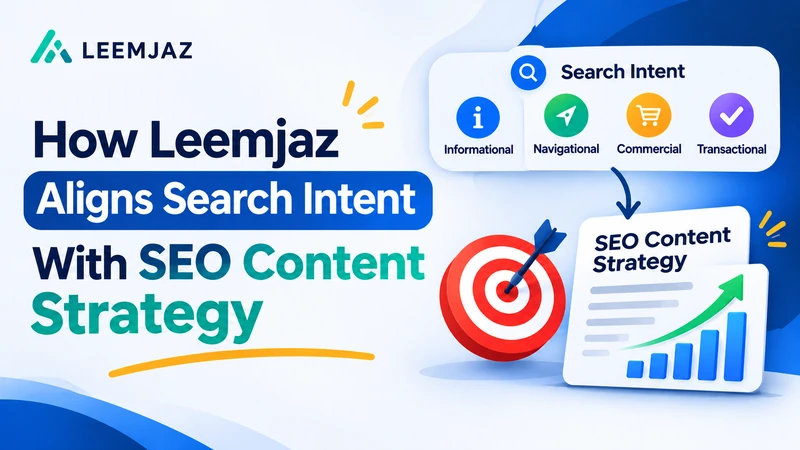
At Leemjaz, search intent should guide more than keyword placement. It should help shape the entire content strategy, from choosing topics to organizing website pages.
The first step is matching each target keyword with the most suitable page. For example, informational keywords can support educational blog content, while service-related searches should lead to relevant service pages. This approach helps prevent a mismatch between what users want and what a website offers.
Next, content should address the main query without unnecessary introductions or unrelated sections. Supporting questions, practical examples, and clear headings can make each page more useful.
Internal linking is another important part of this process. Relevant links help visitors explore related information and discover suitable services. Businesses looking to strengthen their website visibility can explore Leemjaz’s SEO services to learn more about its organic search approach.
Similarly, reviewing existing articles can reveal opportunities to improve content relevance. Rather than publishing a new page for every keyword variation, businesses should check whether an existing article can better satisfy the search.
For more SEO insights and practical guidance, readers can also explore the Leemjaz blog.
Common Search Intent Mistakes That Can Affect SEO Performance
Even well-written content can struggle when it does not match the purpose of a search. Fortunately, businesses can avoid several common mistakes.
Targeting keywords without checking the results: A keyword may look relevant to a business, but the current search results might show a different type of content. Therefore, review the SERP before deciding what to publish.
Using a sales page for every keyword: Not every visitor is ready to buy. For example, someone searching for SEO basics may prefer an educational guide rather than a service pitch.
Ignoring the needs of the audience: Content that focuses only on keyword placement can miss important questions. Instead, explain the topic in a way that helps readers make progress.
Repeating the same information across multiple pages: Publishing similar articles can create overlap and make it harder to establish a clear purpose for each page. A better approach is to give every page a distinct topic and intent.
Forgetting to update older content: Search behavior and competing results can change over time. Consequently, reviewing older articles can help businesses identify missing information and improve relevance.
Search Intent, AI Overviews, and LLM Visibility
Search behavior is also changing as search engines introduce AI-powered experiences. Google AI Overviews and other AI-driven search tools can provide summarized answers alongside traditional results.
For businesses, this makes clear and useful content even more important. Pages should answer relevant questions directly, explain concepts accurately, and organize information under meaningful headings.
Additionally, supporting claims with reliable sources, examples, and relevant context can improve the usefulness of a page. Well-organized content may also be easier for search systems to understand.
However, there is no guaranteed method to appear in AI Overviews or responses from large language models (LLMs). Strong content, clear structure, accessibility, and a helpful user experience are sensible foundations, but they do not guarantee visibility.
Businesses can read Google’s guidance on AI features in Search to understand how these experiences work and how website content may appear in them.
How to Measure the Impact of Search Intent Optimization
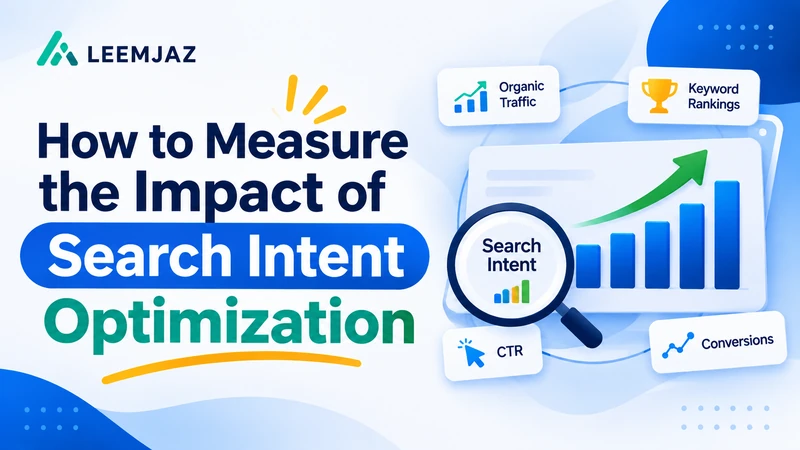
After updating content, businesses should monitor its performance instead of assuming that every change will improve rankings immediately.
Google Search Console is useful for checking impressions, clicks, click-through rate, and average position. These metrics can help identify whether a page is gaining visibility for relevant searches.
Meanwhile, Google Analytics 4 can provide additional information about what visitors do after arriving on a website. For example, businesses can review engagement, important events, and conversions to understand whether organic visitors are taking meaningful actions.
It is also useful to compare performance before and after an update. However, avoid judging results from only a few days of data. Search performance can fluctuate, so allow enough time to identify a meaningful trend.
Most importantly, look beyond traffic numbers. A page that attracts fewer visitors but generates relevant enquiries may be more valuable than one that receives many visits without meaningful engagement.
Conclusion
Search intent plays an important role in creating content that meets users’ expectations. When businesses understand why people search for particular terms, they can choose better keywords, build more relevant pages, and improve the overall content experience.
However, successful SEO requires more than matching a keyword with a page. Content quality, technical performance, internal linking, and ongoing improvements also matter.
For businesses aiming to strengthen their organic visibility, Leemjaz can use search intent as a foundation for a more focused SEO content strategy. By creating useful pages for the right audience, businesses can work toward attracting relevant traffic and generating meaningful leads.
Frequently Asked Questions
1. How does search intent affect organic rankings?
Search intent helps determine whether a page matches what users expect to find. Content that satisfies the purpose of a query is more relevant and useful, which can support better organic search performance.
2. What are the four types of search intent?
The four main types are informational, navigational, commercial investigation, and transactional. Each represents a different reason for searching, from learning about a topic to finding a product or service.
3. How can I find the search intent of a keyword?
Search the keyword on Google and review the top results. Look at the page types, headings, and topics that appear most often. These patterns can help you understand what users expect.
4. Can search intent improve website traffic and conversions?
Yes. Matching content to search intent can help attract visitors who are interested in the information or services a business offers. When the page also provides a clear next step, it may support more enquiries and conversions.
5. Does search intent matter for AI Overviews and LLMs?
Yes. Content that answers questions clearly and provides useful context can be easier for AI-powered search systems to interpret. However, matching search intent does not guarantee inclusion in AI-generated results.