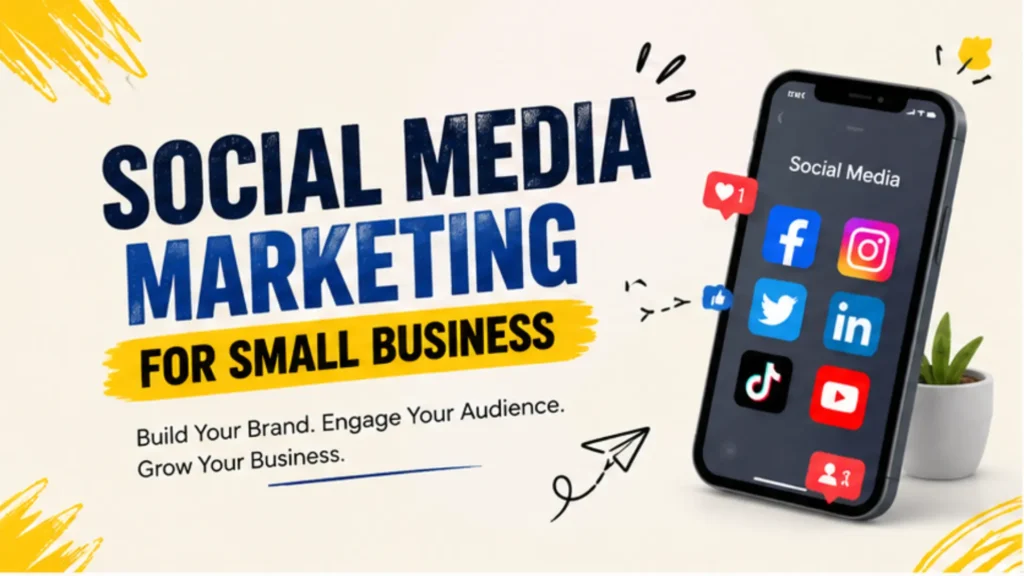
Most advice about social media marketing for small business is written for companies with a marketing department. You do not have one. You have a business to run, maybe five spare hours a week, and a feed you feel guilty about every time you remember it exists. This guide is built for that reality. We run social campaigns for small businesses daily at our agency, and the honest truth is that the winners are not the owners posting the most. They are the ones with a simple system matched to their time and budget. Below you will find exactly that: which platform deserves your limited hours, what to post, a weekly schedule that survives your busiest week, real costs for doing it yourself versus getting help, and the 2026 shift that puts your social content inside AI recommendations.
Social media marketing for small business works best with one or two platforms done consistently, not five done poorly. Pick the platform where your customers already are (Instagram and TikTok for visual and local consumer businesses, Facebook for community and older demographics, LinkedIn for B2B), post 3 to 4 times weekly with short form video at the center, follow the 80/20 rule (80 percent value, 20 percent promotion), and spend 15 minutes daily on engagement. Budget-wise, DIY costs only time, while affordable social media marketing services run $500 to $2,500 monthly. In 2026, 51 percent of customers discover new brands through social media, and consistent profiles now feed AI recommendations too.
What Are the Benefits of Social Media Marketing for Small Business?
The benefits of social media marketing for small business come down to one advantage no other channel offers: you can compete with bigger brands using personality instead of budget.
Customers discover you there first. 51 percent of customers use social media to find new brands and products, and 48 percent specifically prefer social media to learn about small businesses. Your feed is often the first impression, checked before your website and sometimes before a visit.
Your smallness is the advantage. Big brands cannot show the owner packing orders, the team behind the counter, or a same-day reply from the actual founder. People buy from people, and small businesses are the only ones who can prove there are people inside.
It costs time before it costs money. Every major platform is free to start. A smartphone, decent light, and consistency beat a production budget on every algorithm in 2026.
It compounds with your other channels. Social presence drives profile visits, website traffic, and searches for your brand name, feeding the customers your Google presence then converts.
Which Social Media Platform Is Best for Small Business?
The best social media platform for a small business is the one your customers already use, and it is almost never all of them. One thriving profile beats four ghost towns, so choose using this table and ignore the rest until the first platform works.
| Business Type | Best Platform | Second Platform | Why |
| Restaurant, cafe, food | TikTok | Visual craving content, local discovery | |
| Retail and ecommerce | TikTok or Pinterest | Product discovery, shoppable posts | |
| Local services (salon, clinic, trades) | Community groups, local reach, reviews | ||
| B2B and professional services | YouTube | Decision-makers, authority building | |
| Coaches, creators, education | YouTube or TikTok | Depth builds trust, short video builds reach |
Platform demographics back these picks: Pew Research Center data consistently shows YouTube and Facebook leading overall US adult usage while Instagram and TikTok dominate under-35 audiences, so match the platform to your actual customer’s age and habits, not to trends.
How Do You Build a Social Media Strategy for Small Business?
A social media strategy for small business needs four decisions, made once, then executed weekly. Skip the 40-page strategy documents; this fits on one page.
Decision 1: One goal. Foot traffic, booked calls, online orders, or brand awareness in your area. Every post should serve it. “More followers” is not a goal, because followers who never buy are decoration.
Decision 2: One primary platform. From the table above. Add a second only after the first produces results for three straight months.
Decision 3: Three content pillars. The recurring themes you rotate: for a bakery, that might be behind-the-scenes baking, customer moments, and weekly specials. Pillars kill the daily “what do I post” paralysis.
Decision 4: A posting rhythm you can sustain. Three to four posts weekly, every week, beats daily posting that collapses by March. Algorithms reward consistency over volume, and so do audiences.
What Should a Small Business Post on Social Media?
Follow the 80/20 rule: 80 percent of posts deliver value or personality, 20 percent sell. Feeds that only pitch get unfollowed, while feeds that entertain earn the right to sell.
Short form video first. Reels and TikToks of your process, your product being made, or your space get the widest organic reach of any format in 2026. Hook viewers in the first two seconds and keep clips under 30.
Faces, not just products. The owner’s story, staff introductions, the regular who visits every Tuesday. Personality is the content big competitors cannot copy.
Customer content. Repost tagged photos and stories with credit. User generated content converts better than anything you produce, because buyers trust buyers.
Proof and results. Before-and-afters, reviews as graphics, milestones. Quiet credibility that sells without pitching.
The 20 percent that sells. Offers, new products, and clear calls to action, made specific: “Book this week and mention this post” outperforms “check us out.”
The same playbook drives the food businesses we work with, and the deeper local tactics sit in these restaurant marketing ideas, most of which apply to any local small business.
How Do You Manage Social Media in 5 Hours a Week?
This is the section missing from every guide, and it is the one that decides whether any of this survives contact with your real schedule.
Batch day (2.5 hours, once weekly). Film and photograph everything for the week in one session: 3 to 4 short videos, a handful of photos, captions written in the same sitting & invideo’s agentic video editor can then take that raw footage and handle the first cut, syncing, and trims on your direction, so editing does not eat into the same afternoon. Schedule everything using each platform’s free scheduler.
Daily engagement (15 minutes, ideally same time). Reply to every comment and message, engage with 5 to 10 local or industry accounts, and repost any customer tags. Engagement is what algorithms and communities actually reward, and 15 focused minutes covers it.
Weekly review (30 minutes). Check which posts performed, note the pattern, and make next week’s batch lean toward what worked.
That is the whole system: five hours, no burnout, compounding results. The owners who fail on social are almost never lazy. They just tried to run a daily content operation on top of a full-time business, and the system above is built so that can never happen.
How Much Does Social Media Marketing Cost for a Small Business?
Honest 2026 numbers across every path, including the affordable social media marketing options nobody prices clearly.
| Approach | Monthly Cost | What You Get |
| DIY with free tools | $0 to $50 | Your 5 hours weekly, free schedulers, phone content |
| DIY plus paid boosts | $100 to $500 | Above, plus boosted top posts for local reach |
| Freelancer | $300 to $1,000 | Content creation and posting, light engagement |
| Affordable agency package | $500 to $2,500 | Strategy, content, management, reporting |
| Full service with paid ads | $1,500 to $5,000+ | Everything, plus ad campaigns (ad spend separate) |
The honest guidance: start DIY with the 5-hour system if cash is tight, add $5 to $10 daily boosts on proven posts once something works, and consider social media marketing services for small business when your time becomes worth more than the fee, which for most owners happens somewhere around the point social starts producing real customers. The complete breakdown of what professional social media marketing services include shows exactly what those fees should buy at every tier.
Can Social Media Get Your Business Recommended by AI?
Yes, and this is the 2026 opportunity almost no small business has noticed yet.
People increasingly ask ChatGPT and Google’s AI “best coffee shop near me” or “who does affordable logo design,” and the AI answers with specific business names. Those recommendations pull from your digital footprint: an active social presence, consistent business information, fresh reviews, and content that clearly states what you do and where.
Social feeds this system three ways. Active profiles signal a living business to AI systems cross-checking sources. Social content creates the brand searches and mentions that build the authority AI trusts. And the journey your social posts start (see it on Instagram, search it on Google, buy) runs on the same visibility mechanics as everything else online, which is exactly how a search engine works underneath every discovery.
The practical move: keep your name, offer, and location consistent across every profile, post consistently, and treat reviews as content. Small businesses building these signals now will own their area’s AI recommendations while competitors are still debating whether to post this week.
How Leemjaz Runs Social Media for Small Businesses
A real client pattern shows what this looks like when the system runs properly.
A US food business came to Leemjaz spending on social ads while the foundation leaked: inconsistent posting, an incomplete Google presence, and no connection between the two. We rebuilt it as one system: consistent short form video on a sustainable schedule, engagement handled daily, the search foundation fixed so social attention had somewhere to convert. Within three months, the same ad budget produced roughly double the bookings, because the demand social created finally landed on a presence built to capture it.
That connected approach is the whole difference. Social media marketing for small business fails in isolation and compounds inside a system, which is why our social work always connects to the search engine optimization services layer that catches what social media creates.
Ready to stop guessing? If you want the 5-hour system built for you, or a full engine running while you run the business, the social media marketing team at Leemjaz offers a free social presence audit for small businesses: we show you exactly what to fix, what to post, and what it should cost before you spend anything.
Key Takeaways
- 51 percent of customers discover brands on social, and 48 percent prefer it for learning about small businesses, making social the front door in 2026.
- Pick one platform by business type (the table above), master it for three months, then expand.
- Build the one-page strategy: one goal, one platform, three content pillars, a sustainable rhythm.
- Post 3 to 4 times weekly following the 80/20 rule, with short form video and real faces leading.
- Run the 5-hour system: one batch day, 15 daily engagement minutes, one weekly review.
- Budget honestly: DIY costs time, affordable social media marketing services run $500 to $2,500 monthly.
- Consistent profiles now feed AI recommendations, the discovery layer most competitors have not noticed.
Frequently Asked Questions
1. How can a small business use social media for marketing?
Pick the one platform your customers use most, define one business goal and three content pillars, then post 3 to 4 times weekly with short form video, behind-the-scenes content, and customer stories following the 80/20 value-to-promotion rule. Add 15 minutes of daily engagement, and boost proven posts with small budgets once organic results appear.
2. Which social media platform is best for small business?
It depends on your customers: Instagram and TikTok lead for restaurants, retail, and visual businesses, Facebook remains strongest for local services and community reach, LinkedIn wins for B2B, and YouTube builds authority for coaches and educators. One platform consistently beats four done occasionally, so start where your buyers already scroll.
3. How much does social media marketing cost for a small business?
DIY costs only time plus optional $100 to $500 monthly in post boosts. Freelancers run $300 to $1,000 monthly, affordable agency packages run $500 to $2,500, and full service with paid campaigns runs $1,500 to $5,000+ with ad spend separate. Most small businesses should start lean and upgrade when social starts producing customers.
4. How often should a small business post on social media?
Three to four times per week, every week, is the sweet spot for small businesses in 2026. Consistency matters more than volume, because algorithms and audiences both reward reliable presence over bursts. Daily posting only helps if you can sustain it permanently, and most owners cannot, so build the rhythm you can keep.
5. Is social media marketing worth it for small businesses?
Yes, when run as a system rather than random posting. Social media is where most customers now discover small businesses, it costs time before it costs money, and it feeds every other channel: brand searches, website visits, reviews, and increasingly AI recommendations. The return depends on consistency and connecting social to a presence that converts.
6. Can I do social media marketing myself?
Yes, and most small businesses should start that way using a batching system: one weekly content session, 15 minutes of daily engagement, and a simple review of what worked. The ceiling arrives when your time becomes worth more than an agency fee, or when paid campaigns and multi-platform growth need specialist skills.
Conclusion
Social media marketing for small business is not a content volume contest, and it never rewards guilt-driven bursts of posting. It rewards a small system run relentlessly: one platform your customers actually use, three content pillars that kill the blank-page problem, short form video with real faces, the 80/20 rule, and five honest hours a week protected like any other business operation. Price it truthfully, whether that is your own batch day or an affordable monthly package, and connect it to a search presence that converts the attention, because in 2026 your consistency feeds Google rankings and AI recommendations at the same time. Start this week with the one-page strategy, run the system for ninety days, and your feed stops being a chore and starts being the front door your best customers walk through. And if you would rather have it built for you, the free audit is one message away.