Improving organic search rankings requires more than publishing blog posts or adding keywords to website pages. Businesses need a well-planned SEO strategy that connects search intent, technical performance, content quality, and website authority. At Leemjaz, the focus is on helping businesses build sustainable organic visibility through practical search engine optimization strategies. Whether a website struggles with declining traffic, poor keyword positions, or limited search visibility, the right SEO approach can help turn these challenges into opportunities for long-term growth.
Why Organic Search Rankings Matter for Business Growth
Organic search rankings determine where your website appears in unpaid search results when potential customers look for information, products, or services.
A stronger position can increase your website’s visibility and attract visitors who already have an interest in what your business offers.
However, ranking improvements should support meaningful business objectives rather than traffic alone.
For example, a business offering digital marketing services needs visitors who are interested in SEO, content marketing, website optimization, and lead generation. Attracting unrelated visitors might increase traffic without producing valuable enquiries.
Leemjaz approaches organic SEO with this distinction in mind. The objective is to improve search visibility while attracting relevant audiences who have a genuine reason to engage with the business.
1. Start With Keyword Research and Search Intent
Keyword research helps businesses understand what their potential customers search for and which topics deserve attention.
Instead of targeting every popular keyword, identify search terms that connect directly with your services, audience, and business goals.
Find Relevant Organic SEO Keywords
Start by identifying your main services and the problems they solve. Then research the phrases customers use when looking for those solutions.
For example, a digital marketing agency might target terms such as organic SEO services, technical SEO strategies, website ranking improvement, and organic traffic growth.
Tools such as Google Keyword Planner, Ahrefs, and Google Search Console can help identify keyword opportunities.
Evaluate each keyword based on its search intent, competition, relevance, and potential business value.
Match Keywords With Search Intent
Search intent explains what users expect to find when they enter a query.
Informational searches require useful explanations and educational resources. Commercial searches require comparisons, service details, and evidence that helps users evaluate providers. Transactional searches indicate that users are closer to taking action.
A page that matches the wrong intent can struggle to perform even when it contains the target keyword.
Leemjaz considers search intent when developing SEO content strategies so that each page addresses the needs of its intended audience.
2. Optimize Existing Content Before Publishing More
Publishing new articles regularly does not guarantee better organic rankings. Sometimes, existing pages offer stronger opportunities for improvement.
Review your website content to identify pages with declining traffic, low click-through rates, outdated information, or keywords that rank just outside the first page.
Improve On-Page SEO Elements
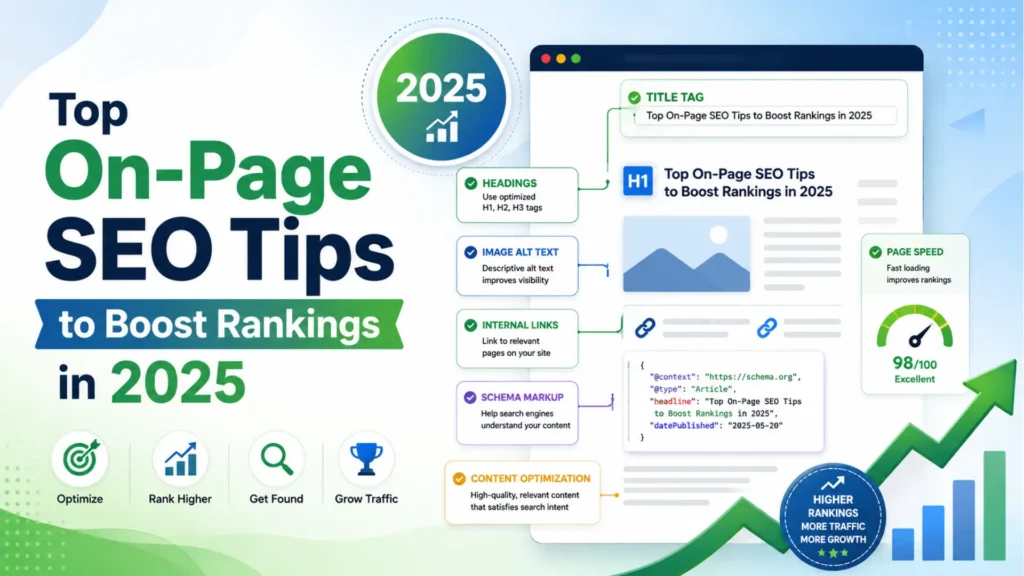
Start with the page title, meta description, headings, URL, and introductory paragraph.
Make sure the primary keyword appears naturally in important locations. Use related phrases throughout the content when they improve clarity and relevance.
Your headings should organize information logically instead of repeating the same keyword unnecessarily.
Also, improve image alt text, add relevant internal links, and remove information that no longer helps readers.
Refresh Content With Useful Information
A content update should add genuine value rather than simply change the publication date.
Include current information, clearer explanations, relevant examples, and answers to questions that the original article overlooked.
For example, an older article about SEO rankings might explain keyword research and backlinks but ignore AI Overviews, modern content quality expectations, and conversion tracking.
Updating these sections can make the resource more useful to current readers.
3. Build Topical Authority Through Relevant Content
Search engines need to understand what your website covers and how its pages relate to one another.
A collection of unrelated articles rarely communicates the same level of subject relevance as a well-organized content strategy.
Create Topic Clusters Around Your Services
Start with a central topic that represents an important business service. Then develop supporting articles that answer related customer questions.
For an agency focusing on organic SEO, a topic cluster could include keyword research, technical SEO, on-page optimization, link building, content optimization, and SEO performance measurement.
Each supporting article should cover a distinct topic and link to relevant resources.
This structure helps visitors explore related information while giving search engines clearer context about your website.
Leemjaz can use this approach to connect educational content with its organic search engine optimization services.
The result is a more organized content ecosystem that supports both informational searches and commercial discovery.
4. Improve Technical SEO and Website Performance
Content quality matters, but search engines also need to access, understand, and index your website.
Technical SEO addresses the website issues that can interfere with these processes.
Check Crawling and Indexing
Start by reviewing your XML sitemap and Google Search Console coverage reports.
Make sure important pages return the correct status codes and remain accessible to search engine crawlers.
Check for accidental noindex tags, incorrect canonical URLs, broken internal links, and unnecessary redirects.
If Google cannot access or index an important page, that page cannot perform in organic search results.
Improve Website Speed and Mobile Experience
Visitors expect websites to load quickly and work properly across different devices.
Large images, unnecessary scripts, poorly configured caching, and excessive plugins can affect website performance.
Review your Core Web Vitals, particularly Largest Contentful Paint (LCP), Interaction to Next Paint (INP), and Cumulative Layout Shift (CLS).
Also, test important pages on mobile devices. Make sure navigation, text, forms, and buttons remain easy to use.
Leemjaz’s SEO approach considers technical performance alongside content and website optimization because these elements work together to support search visibility.
5. Strengthen Internal Linking and Website Structure
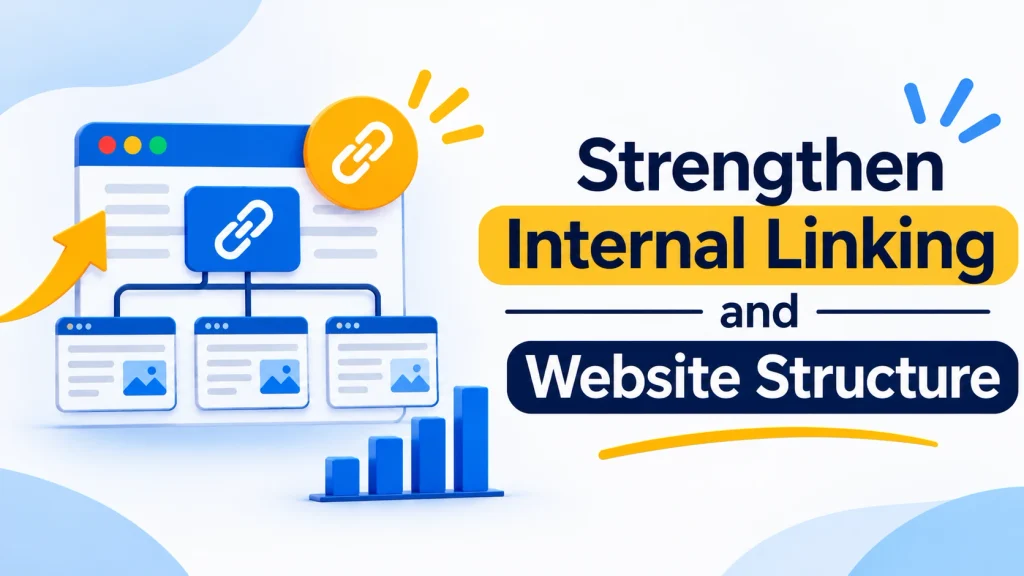
Internal links connect related pages within the same website. They help visitors discover additional resources and help search engines understand the relationship between different pages.
A strong internal linking structure also helps distribute link equity across important pages.
Use Descriptive Anchor Text
Choose anchor text that accurately describes the destination page.
For example, an article discussing content optimization can naturally link to a related guide about search engine optimization services.
Avoid repeating identical keyword-rich anchors across every page. Use natural variations that fit the surrounding sentence.
Connect Important Service and Blog Pages
Your service pages should receive relevant internal links from supporting educational content.
For instance, a blog discussing organic search visibility can direct readers toward your SEO service page when they need professional assistance.
You can explore more resources through the Leemjaz blog library to understand how related marketing topics fit into a broader digital strategy.
6. Earn Relevant Backlinks to Build Website Authority
Backlinks are links from external websites that point to your pages. Relevant, editorially earned backlinks can strengthen your website’s authority and help search engines discover useful resources.
However, backlink quality matters more than simply increasing the total number of links.
Focus on Relevant Link-Building Opportunities
Look for websites that publish content related to your industry, audience, or services.
Guest contributions, original research, useful industry resources, and genuine editorial mentions can create opportunities to earn relevant backlinks.
For example, a digital marketing agency could contribute practical SEO insights to marketing publications or create research that other industry websites may reference.
Avoid automated link schemes, paid link farms, and unrelated backlinks created only to manipulate rankings.
A sustainable link-building strategy should strengthen your website’s reputation rather than create an artificial backlink profile.
7. Optimize Content for AI Overviews and LLM Visibility
Search behavior continues to evolve as users turn to AI-powered search experiences for explanations, comparisons, and recommendations.
Google AI Overviews, AI Mode, ChatGPT Search, and other answer engines create additional opportunities for businesses to become visible.
However, appearing in these experiences requires useful, accessible, and trustworthy information. No specific content format guarantees an AI citation.
Make Important Information Easy to Understand
Start each major section with a direct explanation of the question it addresses.
Use descriptive headings, concise definitions, relevant examples, and supporting details. Explain technical concepts in language that your target audience understands.
For example, a section about technical SEO should explain what it involves, why it matters, and which website issues businesses should investigate.
Demonstrate First-Hand Knowledge and Credibility
Generic explanations rarely distinguish one website from another.
Include original insights, practical observations, expert contributions, and relevant examples whenever possible.
Clearly identify authors and provide accurate information about their expertise. Support important claims with trustworthy references.
Use structured data where appropriate, but do not treat schema markup as a shortcut to AI visibility.
Google’s official guidance on optimizing for AI search features explains that established SEO practices remain important for AI Overviews and other generative search experiences.
Leemjaz can incorporate these principles into content strategies that support visibility across traditional and AI-powered search.
8. Measure Organic Search Performance and Improve Continuously
SEO requires regular evaluation because rankings, competitors, search behavior, and website performance change over time.
Without measurement, businesses cannot easily determine which activities contribute to organic growth.
Monitor Important SEO Metrics
Google Search Console provides valuable information about organic search performance.
Review impressions, clicks, average positions, and click-through rates to understand how users discover your website.
Google Analytics 4 can provide additional insight into organic landing pages, user engagement, and conversions.
For example, a page might receive more impressions but fewer clicks. This could indicate that its title and description need improvement or that the search results have changed.
Another page might attract fewer visitors but generate more qualified enquiries. That page could deserve greater attention despite its lower traffic.
Turn SEO Data Into Action
Review performance regularly and identify the pages that need attention.
Prioritize declining pages, keywords approaching page one, content gaps, indexing problems, and pages that attract visitors without generating meaningful engagement.
This process helps businesses make informed decisions instead of changing website content without a clear reason.
Leemjaz focuses on connecting SEO activities with measurable business objectives so that improvements support more than keyword positions alone.
9. Why Choose Leemjaz for Organic Search Growth?
Improving organic search rankings requires a coordinated strategy rather than isolated SEO activities.
Leemjaz approaches organic growth through a combination of technical optimization, keyword research, content strategy, on-page improvements, and off-page SEO.
The process starts with understanding the website, its existing search performance, its target audience, and its business objectives.
From there, the strategy can prioritize the improvements that matter most.
Technical SEO helps address crawling, indexing, and performance issues. Content optimization aligns pages with relevant search intent. Internal linking connects related resources, while ethical link-building activities support website authority.
Performance tracking helps identify opportunities and guide future improvements.
Businesses looking for a more structured approach can explore the Leemjaz SEO service approach to understand how professional SEO activities fit together.
Rather than promising instant rankings, the focus should remain on consistent improvements, relevant traffic, and sustainable organic visibility.
10. Build Long-Term Organic Growth With a Smarter SEO Strategy
Improving organic search rankings takes consistent work across content, technical performance, website structure, and authority.
Businesses that focus only on keywords often overlook the wider factors that influence search visibility and customer experience.
A more effective approach begins with understanding the audience, identifying realistic keyword opportunities, improving existing pages, and creating genuinely useful content.
Technical SEO ensures that search engines can access important pages, while internal linking and relevant backlinks help strengthen the website’s overall structure and authority.
AI-powered search adds another consideration, but it does not replace the fundamentals of quality SEO.
With a coordinated strategy, Leemjaz helps businesses work toward stronger organic visibility, more relevant website traffic, and better opportunities to convert visitors into customers.
Frequently Asked Questions
1. How can I improve my organic search rankings quickly?
Start by identifying pages with indexing issues, declining performance, or keywords close to page one. Improve their content, search intent alignment, internal links, and technical performance. The time required to see results depends on competition, website history, and the changes involved.
2. How long does it take to improve organic search rankings?
SEO timelines vary depending on website authority, competition, technical health, and content quality. Some technical improvements may produce changes relatively quickly, while competitive keywords and new content often require several months of consistent work.
3. Do backlinks still help improve organic search rankings?
Yes. Relevant, quality backlinks can help search engines understand the authority and reputation of a website. However, businesses should prioritize naturally earned links from relevant sources instead of purchasing large quantities of low-quality backlinks.
4. How do I measure organic search performance?
Use Google Search Console to monitor organic clicks, impressions, average positions, and CTR. Combine this information with Google Analytics 4 to understand landing-page performance, engagement, and conversions.
5. Can SEO improve visibility in Google AI Overviews and ChatGPT?
Good SEO practices can support visibility across AI-powered search experiences. Publish original, accurate, useful content, maintain crawlable pages, organize information clearly, and demonstrate relevant expertise. However, no agency can guarantee inclusion in AI-generated answers.