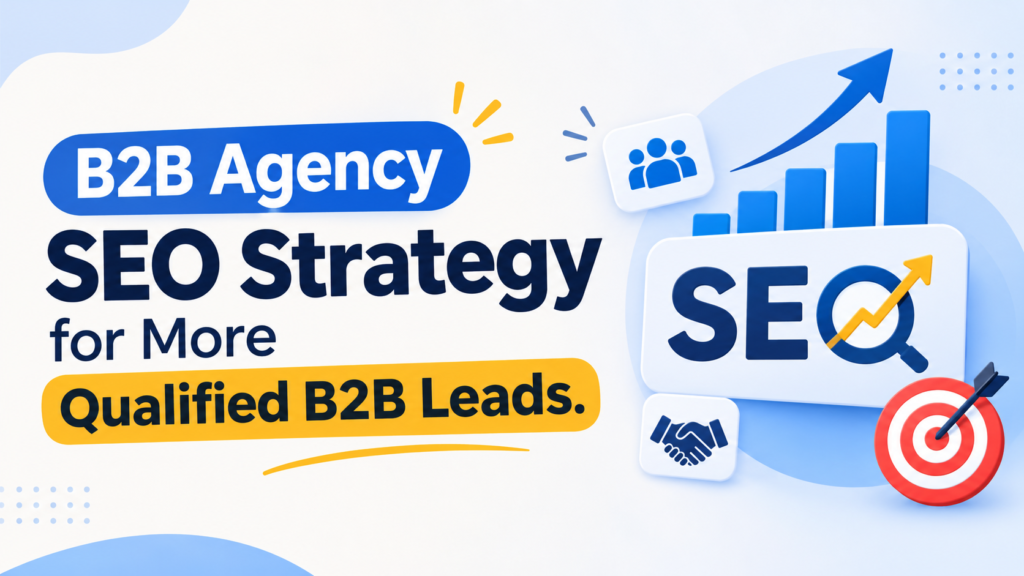
A successful B2B agency SEO strategy does more than improve keyword rankings. It helps businesses reach decision-makers, answer important buying questions, and attract potential customers who are actively searching for solutions. However, many companies struggle to connect their SEO activities with actual business opportunities.
At Leemjaz, the focus is on connecting search visibility with meaningful business goals. Through SEO, content marketing, website optimization, and digital marketing, businesses can build a stronger online presence and create more opportunities to attract relevant prospects.
The challenge is knowing which activities deserve attention first. A business needs the right keywords, useful content, technically sound pages, and a clear path from search results to enquiries. This guide explains how Leemjaz approaches a B2B agency SEO strategy and how businesses can use these practices to build sustainable organic growth.
What Is a B2B Agency SEO Strategy?
A B2B agency SEO strategy is a structured approach to improving a business website’s visibility in search engines and attracting other businesses as potential customers.
Unlike consumer-focused SEO, B2B search optimization needs to consider longer buying journeys, multiple decision-makers, and more detailed research before a purchase.
For example, someone searching for general marketing information may only want to understand a topic. However, a company searching for a reliable B2B SEO agency may already be comparing providers and considering professional services.
These searches require different content and conversion approaches.
A well-planned strategy connects several important activities:
- Keyword research based on business objectives and search intent.
- Content creation that answers real customer questions.
- Technical SEO that makes important pages accessible.
- On-page optimization that improves relevance and clarity.
- Internal linking that connects related resources.
- Conversion optimization that encourages qualified enquiries.
- Performance tracking that connects organic visibility with business outcomes.
Leemjaz brings these activities into a broader digital marketing approach, helping businesses understand how search optimization supports their overall growth objectives.
How Leemjaz Builds a B2B Agency SEO Strategy
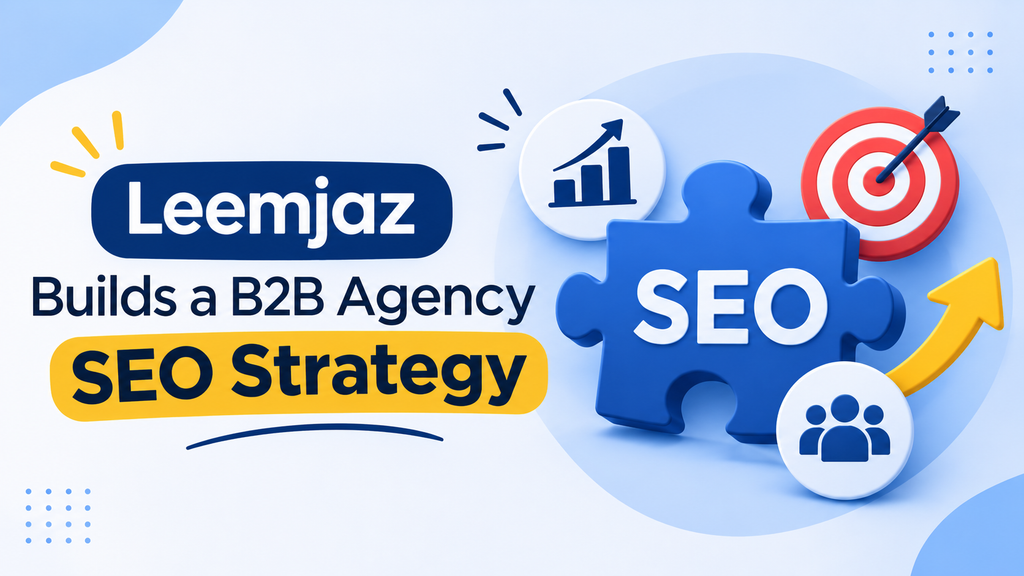
An effective strategy should begin with research rather than immediately publishing blog posts or targeting high-volume keywords.
Leemjaz approaches B2B SEO through connected stages that help businesses identify their opportunities, prioritize improvements, and measure progress.
1. Understand the Ideal Customer Profile
Before selecting keywords, a business needs to understand whom it wants to attract.
An ideal customer profile (ICP) describes the companies most likely to benefit from its products or services. It can include industry, company size, location, business challenges, and purchasing requirements.
For example, a B2B software company might target small and medium-sized businesses looking to improve their internal operations.
Its potential customers could include business owners, operations managers, and technology decision-makers. Each group may search for different information.
Understanding these differences helps an SEO agency create content that addresses the concerns of actual buyers rather than attracting unrelated visitors.
Leemjaz can use this research to guide keyword selection, content planning, and website optimization.
2. Research Keywords Based on Buying Intent
Keyword research should identify more than popular search terms. It should reveal what potential customers want to accomplish when they search.
A useful B2B keyword strategy considers three main stages.
Informational intent: Buyers want to understand a problem or explore possible solutions. Searches might include how to improve website visibility or what technical SEO involves.
Commercial intent: Buyers compare different approaches and providers. Searches might include the best B2B SEO agency or SEO services for SaaS companies.
Transactional intent: Buyers are closer to contacting a provider or purchasing a service. Searches might include hire a B2B SEO agency or request an SEO consultation.
Each search requires an appropriate landing page or resource.
| Search intent | Example keyword | Recommended content |
|---|---|---|
| Informational | How does B2B SEO work? | Educational blog |
| Commercial | Best B2B SEO agency | Comparison guide |
| Transactional | B2B SEO services | Service landing page |
| Problem-aware | Why is my business website not ranking? | Troubleshooting guide |
Leemjaz can prioritize keywords by considering relevance, competition, search intent, and their potential to attract suitable business enquiries.
A keyword with relatively low search volume may offer more commercial value than a broad term attracting thousands of unrelated visitors.
Businesses can also explore Leemjaz’s B2B digital marketing strategy to understand how digital marketing activities can support their wider business goals.
3. Build Content Around the B2B Buying Journey
B2B buyers rarely make decisions after reading one article. They often compare different providers, research industry problems, and discuss possible solutions with other stakeholders.
That makes content planning an important part of SEO.
Leemjaz can help businesses develop content that addresses different stages of this journey.
For example, a company offering cybersecurity services could publish an educational article about common security risks, a comparison guide explaining different security solutions, and a service page describing its professional support.
These pages serve different purposes but connect around the same business offering.
A strong content strategy should include:
- Educational blog posts.
- Industry-specific guides.
- Service and solution pages.
- Comparison articles.
- Frequently asked questions.
- Original research and useful resources.
The goal is not to publish as many articles as possible. Each page should address a specific question, provide useful information, and help readers understand their next step.
4. Create Topic Clusters and a Strong Internal Linking Structure
Publishing related articles without connecting them can make a website difficult to navigate.
Topic clusters solve this problem by organizing related content around a central subject.
A pillar page covers the broader topic, while supporting articles explore specific questions in greater detail.
For example, Leemjaz uses its B2B agency guide as a central resource for businesses exploring B2B marketing services.
Supporting content can address B2B SEO, lead generation, marketing strategies, and agency selection.
Internal links should connect these pages wherever the relationship is useful to readers.
Use descriptive anchor text that explains what the destination page covers. Avoid adding links simply to increase their number.
A logical internal linking structure helps visitors discover related information and helps search engines understand the relationship between important pages.
5. Optimize Service Pages for Search and Conversions
Blog traffic alone cannot sustain a successful B2B SEO campaign.
Businesses also need service pages that explain their offerings and encourage relevant visitors to make contact.
A well-optimized service page should answer several questions.
What problem does the service solve? Who benefits from it? What does the process involve? Why should a potential customer consider this provider? What should the visitor do next?
Leemjaz can support these improvements through keyword research, on-page optimization, content planning, and website development.
For example, an SEO service page should explain the value of keyword research, technical improvements, content optimization, and performance monitoring.
The content should also include a clear call to action, such as requesting a consultation or discussing a business requirement.
Avoid forcing keywords into every heading. A page should communicate its value naturally while remaining relevant to the search query.
Technical SEO Priorities for B2B Websites
Even useful content can struggle to perform when a website has technical problems.
Technical SEO helps search engines access, understand, and index important pages. It also supports a smoother experience for potential customers.
Leemjaz considers technical improvements an important part of building a reliable organic search foundation.
1. Improve Website Speed and Core Web Vitals
B2B visitors expect websites to load properly and provide a smooth browsing experience.
Slow pages, unstable layouts, and delayed interactions can make it harder for visitors to explore services or complete contact forms.
Businesses should review their Core Web Vitals, optimize images, reduce unnecessary scripts, and improve server performance.
However, speed improvements should address actual performance problems rather than rely on arbitrary optimization scores.
2. Check Crawlability and Indexation
Search engines need to discover and access important website pages.
Broken internal links, incorrect noindex directives, blocked resources, and poorly managed redirects can create unnecessary obstacles.
A technical SEO audit should check whether important service pages and supporting articles can be crawled and indexed correctly.
Google Search Console can help businesses monitor indexing issues and understand how their pages perform in organic search.
For additional guidance, businesses can refer to Google’s SEO Starter Guide, which explains how to help search engines discover and understand website content.
3. Use Structured Data Where Appropriate
Structured data provides additional context about website content.
Depending on the page, businesses may use relevant schema types such as Organization, Article, BreadcrumbList, or Service.
The markup must accurately reflect the visible page content. Adding structured data does not guarantee rich results or higher rankings.
Businesses should validate their implementation and correct any errors that affect eligibility.
4. Maintain a Clear Website Architecture
A well-organized website makes it easier for visitors to find relevant information.
Group pages logically around services, industries, and supporting resources. Keep important pages accessible through navigation and relevant internal links.
For a B2B company with several service categories, a clear structure also helps prevent important pages from becoming isolated.
These technical improvements give other SEO activities a stronger foundation.
How Content Marketing Supports B2B SEO Growth
Content marketing and SEO work best when they support the same business objectives.
SEO identifies the questions potential customers search for. Content marketing turns those questions into useful resources that explain problems, compare solutions, and demonstrate relevant knowledge.
However, content should offer something beyond a basic explanation.
For example, a business searching for ways to improve organic visibility may already know what SEO means. It needs practical advice about keyword selection, website structure, content quality, or technical issues.
Leemjaz can help businesses organize content around these needs through blog planning and search-focused content development.
Publish Content That Demonstrates Experience
Original insights make content more useful than generic explanations.
Businesses can include practical examples, expert commentary, original research, and lessons from real projects where they have permission to share them.
For instance, a company discussing website optimization could explain how it identifies common technical problems and decides which fixes deserve priority.
Do not invent client results or present estimates as verified outcomes. If a case study includes performance figures, explain the measurement period and relevant context.
Make Content Useful for AI Search and Google AI Overviews
Search behaviour continues to evolve as users interact with AI-powered search experiences.
B2B businesses should create content that answers questions clearly and provides enough context for readers and search systems to understand the subject.
Leemjaz can strengthen its content approach through several practices.
First, answer the main question directly instead of hiding the useful information behind a lengthy introduction.
Second, use descriptive headings that explain what each section covers.
Third, include relevant examples, definitions, comparisons, and supporting evidence.
Fourth, connect related pages through meaningful internal links.
Finally, identify authors and cite reliable sources when making factual claims.
These practices can improve content clarity and usefulness. However, no SEO agency can guarantee placement in AI Overviews or citations in AI-generated answers.
The priority should remain original, reliable, people-first content that satisfies the reader’s needs.
How Link Building Strengthens B2B Search Visibility
Backlinks remain an important part of building website authority, but their value depends on quality and relevance.
A B2B company should focus on earning links from websites that are genuinely related to its industry or audience.
Leemjaz can support off-page SEO through activities that strengthen a business’s online presence and credibility.
Relevant approaches include:
- Publishing original industry insights that other websites may reference.
- Contributing useful expert commentary to relevant publications.
- Building relationships with industry websites and publishers.
- Creating resources that naturally attract editorial links.
- Monitoring existing backlinks and identifying potentially harmful patterns.
Avoid buying large quantities of low-quality backlinks or relying on automated link schemes.
A smaller number of relevant editorial links can provide more value than hundreds of unrelated placements.
Link building should also support the wider SEO strategy. The pages receiving backlinks should be useful, relevant, and capable of helping visitors understand the business.
How Leemjaz Measures B2B SEO Performance
Ranking improvements are useful, but they do not tell the whole story.
A B2B SEO campaign should measure whether the website attracts relevant visitors and creates meaningful business opportunities.
Leemjaz can use several performance indicators to assess progress.
| SEO metric | What it measures |
|---|---|
| Organic clicks | Visitors arriving through unpaid search results |
| Search impressions | How often pages appear in search results |
| Keyword rankings | Visibility for selected search terms |
| Organic landing-page traffic | Visits to important service and content pages |
| Conversion rate | Percentage of visitors completing desired actions |
| Qualified leads | Enquiries that match the target customer profile |
| Lead-to-customer rate | How many qualified leads become customers |
| Organic-assisted pipeline | Sales opportunities influenced by organic search |
Google Search Console helps monitor search impressions, clicks, and query performance. Google Analytics 4 can help track website engagement and conversions when correctly configured.
A CRM can provide additional information about lead quality and sales progression.
These tools should work together rather than operate as separate reporting systems.
For example, an increase in organic clicks may look positive. However, if those visitors do not match the intended audience or explore relevant service pages, the campaign may need adjustments.
Regular reporting helps businesses identify what works, prioritize improvements, and make informed decisions.
Common B2B SEO Mistakes Businesses Should Avoid
Even businesses with a reasonable SEO budget can struggle when they focus on the wrong priorities.
Recognizing common mistakes helps prevent wasted time and resources.
Targeting Search Volume Instead of Business Relevance
High-volume keywords can attract visitors who have no interest in the services a company offers.
Prioritize search intent, commercial relevance, and audience fit when selecting keywords.
Publishing Articles Without a Clear Purpose
Publishing several articles on similar subjects can create overlapping content and confuse the website’s structure.
Assign each article a specific purpose and connect it to relevant service pages.
Ignoring Conversion Optimization
A website may receive relevant organic traffic but generate very few enquiries.
Review calls to action, contact forms, service descriptions, and landing-page experiences to identify possible barriers.
Overlooking Technical Problems
Broken links, indexing errors, slow pages, and confusing navigation can undermine an otherwise useful SEO strategy.
Monitor technical health regularly and prioritize issues that affect important pages.
Expecting Immediate SEO Results
SEO requires consistent work. Competition, website history, content quality, technical condition, and implementation speed all influence results.
Businesses should set realistic milestones and evaluate progress over time rather than expect guaranteed rankings within a fixed period.
Why Choose Leemjaz for a B2B Agency SEO Strategy?
Choosing an SEO partner involves more than comparing service lists.
Businesses need an agency that understands their target audience, identifies meaningful search opportunities, and connects SEO activities with wider marketing objectives.
Leemjaz offers digital marketing services that businesses can explore when building their online growth strategy.
Its approach brings together several important areas.
SEO and content optimization: Improve search relevance through keyword research, on-page improvements, useful content, and internal linking.
Content marketing: Develop resources that answer customer questions and support different stages of the buying journey.
Website development: Improve website structure, usability, and the experience of visitors exploring business services.
Paid advertising: Support targeted campaigns when businesses need additional visibility through paid search and advertising channels.
Social media marketing: Extend content reach and help businesses maintain a consistent online presence.
The right combination depends on the company’s current position, audience, competition, and available resources.
Businesses can also read how to evaluate a B2B marketing agency before deciding which provider best matches their requirements.
Leemjaz focuses on connecting these services with business goals rather than treating every marketing activity as an independent task.
Turn B2B Search Visibility Into Meaningful Growth
A strong B2B SEO strategy requires more than publishing optimized articles or building backlinks. Businesses need to understand their customers, identify commercially relevant searches, improve important website pages, and create content that genuinely answers buyer questions.
Leemjaz brings these priorities into a wider digital marketing approach through SEO, content marketing, website development, and other supporting services.
The most effective starting point is to identify the biggest gap in your current online presence. It could be limited organic visibility, weak service pages, technical problems, or traffic that fails to generate relevant enquiries.
Once those priorities become clear, businesses can build a focused strategy, measure its performance, and improve it using reliable data.
Sustainable search growth comes from making useful improvements consistently and keeping the needs of real customers at the center of every decision.
Frequently Asked Questions
1. What is a B2B agency SEO strategy?
A B2B agency SEO strategy is a structured plan to improve organic search visibility and attract business customers. It includes keyword research, technical SEO, content optimization, link building, and conversion tracking.
2. How does SEO help B2B companies generate leads?
SEO helps B2B companies appear when potential customers search for relevant services or solutions. Useful content and optimized landing pages can turn that search visibility into relevant enquiries and business opportunities.
3. How long does B2B SEO take to show results?
SEO timelines depend on competition, website condition, content quality, and implementation. Some improvements may appear earlier, while meaningful organic growth often requires several months of consistent work.
4. Which keywords should a B2B company target?
B2B companies should target informational, commercial, and transactional keywords relevant to their services. They should prioritize search intent, audience relevance, competition, and potential business value rather than search volume alone.
5. Can B2B SEO help a website appear in Google AI Overviews?
Good SEO and useful, well-structured content can support visibility across traditional and AI-powered search experiences. However, Google does not guarantee AI Overview appearances, even for well-optimized pages.