Publishing blog posts and adding keywords to website pages will not automatically improve search rankings. Businesses need a clear strategy that connects their content with what potential customers actually want to find. Content optimization for organic search helps businesses improve relevance, answer search queries, and attract visitors who are genuinely interested in their services.
At Leemjaz, content optimization is part of a broader digital marketing approach. It connects keyword research, on-page SEO, content strategy, technical improvements, and link building to help businesses strengthen their online presence. Instead of chasing traffic without a purpose, the focus should remain on attracting relevant visitors and turning their interest into meaningful business opportunities.
What Is Content Optimization for Organic Search?
Content optimization for organic search involves improving website pages, blog posts, and other digital resources so they better satisfy user intent and become easier for search engines to understand.
The process involves more than adding keywords. It requires businesses to examine the information they provide, identify missing details, improve readability, and organize their website content around relevant topics.
For example, a B2B software company might publish an article about project management solutions. However, if the article only explains basic definitions, it may not help readers compare providers or understand which solution fits their business.
A stronger article would address common challenges, compare relevant features, explain practical considerations, and connect readers with appropriate services.
Leemjaz approaches content marketing with this broader purpose. Its strategy connects useful information with SEO and business objectives so that content supports both organic visibility and the customer journey.
Why Content Optimization Matters for Organic Search
A website can publish dozens of articles without attracting the right audience. This often happens when businesses focus on publishing frequency instead of content relevance.
Effective optimization helps address several problems.
Improves search relevance: Search engines can better understand the subject and purpose of a page when its information, headings, and structure clearly match the search query.
Attracts qualified visitors: Content built around relevant customer questions can reach people who are actively researching products, services, or solutions.
Strengthens topical coverage: Related articles and service pages help businesses explain their expertise across important subjects.
Improves user experience: Clear headings, useful examples, and readable paragraphs make information easier to understand.
Supports conversions: Relevant content can guide potential customers toward service pages, consultations, and other meaningful actions.
For B2B businesses, these benefits are particularly important because purchasing decisions often involve several people and multiple research stages.
8 Content Optimization Strategies for Organic Search
Businesses need an organized approach to improve existing pages and create content that serves a clear purpose. Leemjaz can connect these activities through its SEO and content marketing services.
1. Understand Search Intent Before Creating Content
Search intent explains what someone expects to find when entering a query into Google or another search engine.
A person searching for “what is technical SEO” wants an explanation. Someone searching for “SEO agency for SaaS companies” is more likely to compare service providers.
Creating the wrong type of page for a keyword can make it difficult to satisfy the searcher.
Before writing or updating a page, examine the search results and identify the dominant content format.
Consider these common search intents:
- Informational: Users want answers, explanations, or educational resources.
- Navigational: Users want to find a particular website or brand.
- Commercial: Users compare products, agencies, or services before making a decision.
- Transactional: Users are ready to purchase, book, or take another action.
Leemjaz uses audience research and keyword targeting as part of its broader content strategy. This helps businesses connect their website pages with the questions potential customers ask at different stages of the buying journey.
2. Use Keyword Research and Semantic Optimization
Keyword research helps businesses understand how their audiences search for information.
However, targeting one exact phrase throughout an article is not enough. A useful page should also cover related concepts that help explain the main subject.
For example, a page targeting content optimization for organic search can naturally discuss:
- Search intent
- Keyword mapping
- Content audits
- On-page SEO
- Topic clusters
- Internal linking
- Content freshness
- Organic traffic
- Search visibility
- Content performance
These supporting terms provide context without requiring unnatural keyword repetition.
Leemjaz can use keyword research to identify relevant opportunities and organize content around the services and problems that matter to a business.
The objective is to cover a topic comprehensively while keeping every section useful to the reader.
3. Refresh Existing Content Instead of Always Publishing New Pages
Old content can lose relevance as customer expectations, industry practices, and search results change.
A page that once attracted organic visitors may gradually lose visibility because its information is outdated or competing pages provide more useful answers.
Businesses should regularly review their existing content before creating another article on the same subject.
A practical content refresh process includes:
- Identify pages experiencing declining clicks or impressions.
- Compare their current content with the search intent.
- Check for outdated statistics, examples, and references.
- Improve weak explanations and missing sections.
- Review titles, headings, and meta descriptions.
- Add relevant internal links.
- Monitor performance after making substantial changes.
For example, a B2B marketing company may have an article about generating business leads. Updating it with current approaches, clearer examples, and relevant service information could make the page more useful.
Leemjaz can connect content improvements with wider SEO activities rather than treating every new article as an isolated project.
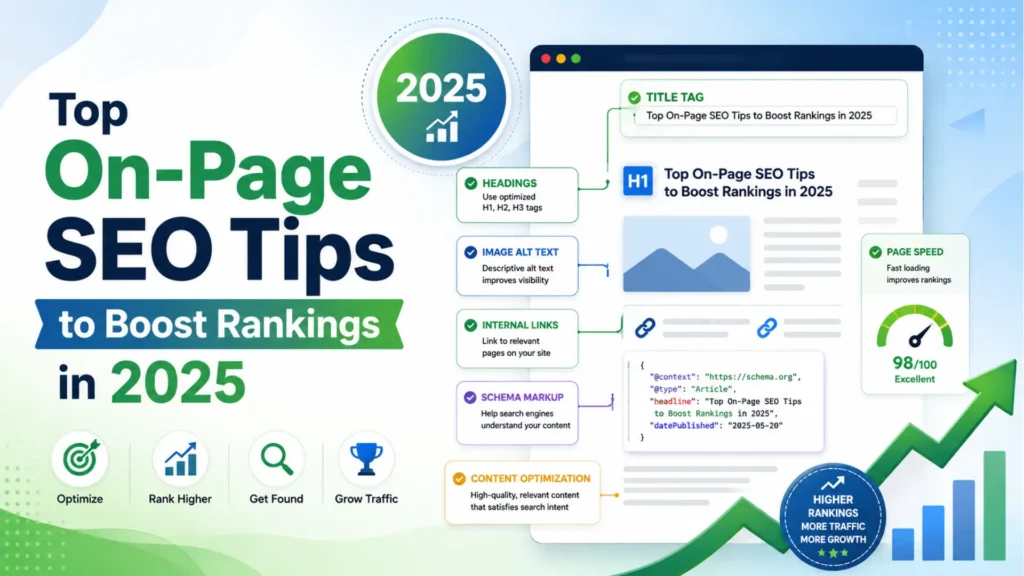
4. Improve Titles, Headings, and On-Page SEO
Titles and headings help readers understand what a page covers. They also provide useful context for search engines.
Every important page should have a descriptive title and a logical heading structure.
Follow these practices:
- Write a clear SEO title that reflects the page’s primary topic.
- Include the focus keyword naturally in the H1.
- Use H2 headings to introduce major sections.
- Use H3 headings when a section needs smaller subtopics.
- Write descriptive meta descriptions that encourage relevant clicks.
- Add meaningful image alt text.
- Use short, readable URLs.
Avoid repeating the same keyword in every heading. Each heading should introduce a distinct idea or answer a specific question.
For businesses working with Leemjaz, on-page optimization can form part of a wider strategy that connects website content, keyword research, and technical improvements.
5. Build Strong Internal Links and Topic Clusters
Internal links connect related pages on the same website. They help visitors discover additional information and allow search engines to understand relationships between different resources.
A useful internal linking strategy should follow a logical structure.
For example, Leemjaz uses its B2B agency guide as a central resource for businesses exploring digital marketing services.
Supporting articles can expand on specific areas such as content marketing, SEO strategy, and lead generation.
This structure creates opportunities to connect educational content with relevant service pages.
When adding internal links:
- Choose pages that genuinely relate to the current topic.
- Use descriptive anchor text.
- Link to important service and pillar pages where relevant.
- Avoid repeating identical anchor text unnecessarily.
- Check for broken links and inaccessible destinations.
A good internal linking strategy should help readers move naturally from learning about a problem to understanding possible solutions.
6. Create Useful, Trustworthy, and Original Content
Search engines aim to surface information that helps people. Businesses should therefore prioritize original insights, reliable information, and clear explanations.
A page should offer something more useful than a collection of commonly repeated definitions.
Consider adding:
- Original examples from relevant industries.
- Practical recommendations.
- Comparisons that help readers make decisions.
- Reliable research and supporting references.
- Clear explanations of complex topics.
- Accurate author information.
Google’s guidance on creating helpful, reliable, people-first content provides useful questions for evaluating content quality.
Leemjaz’s content marketing approach focuses on connecting educational material with business objectives. This allows companies to build resources that inform potential customers while communicating their expertise.
However, businesses should only publish case studies, statistics, and performance claims that they can verify.
7. Optimize Content for AI Overviews and AI Search
Search behavior continues to evolve as people use AI-powered search experiences to discover information and compare solutions.
Businesses should make their content easy to understand, well organized, and supported by reliable information.
Several practices can help:
Answer questions directly: Introduce the main answer near the beginning of a relevant section instead of making readers search through unnecessary paragraphs.
Use descriptive headings: Organize information around specific questions and topics.
Explain concepts clearly: Provide definitions, examples, comparisons, and supporting context.
Demonstrate credibility: Identify authors, reference trustworthy sources, and support factual statements.
Maintain consistent information: Ensure that business names, services, descriptions, and important details remain accurate across the website.
Use structured data appropriately: Implement relevant schema markup when it accurately represents visible page content.
These practices can improve content clarity and help search systems interpret information. However, no agency can guarantee placement in Google AI Overviews or citations in ChatGPT and other AI platforms.
Leemjaz can incorporate AI search visibility into a wider SEO and content strategy while maintaining the priority of useful, accurate information.
8. Measure Organic Search Performance and Improve Continuously
Publishing optimized content is only one part of the process. Businesses must also understand whether their improvements are producing meaningful results.
Google Search Console provides useful information about how website pages perform in Google Search.
Important metrics include:
- Impressions: How often a page appears in search results.
- Clicks: How many people visit through organic search.
- Click-through rate: The percentage of impressions that generate clicks.
- Average position: The average ranking position for selected queries.
- Organic conversions: Leads, enquiries, or other valuable actions generated through organic visits.
Google Analytics 4 can provide additional insight into user engagement and conversion activity.
For example, a service page might receive more organic visits but generate very few enquiries. This suggests that the business should examine its messaging, audience relevance, page experience, and calls to action.
Leemjaz connects marketing performance with business objectives rather than treating traffic as the only measure of success.
How Leemjaz Connects Content Optimization with Business Growth
Content optimization works best when it supports a wider digital marketing strategy.
A business may have excellent articles but struggle with website performance, weak internal linking, or a lack of relevant authority. Addressing only the content will not solve every problem.
Leemjaz connects several important activities.
SEO strategy and keyword research: Identify relevant search opportunities and align website pages with audience intent.
Content marketing: Develop educational resources and website content that answer customer questions.
On-page optimization: Improve headings, page structure, keyword relevance, and internal links.
Technical SEO: Identify website issues involving crawling, indexing, and performance.
Link building: Pursue relevant editorial opportunities that support website authority and discovery.
Performance reporting: Monitor organic visibility, engagement, enquiries, and other meaningful outcomes.
Businesses can explore Leemjaz’s B2B content marketing services to understand how content planning, SEO writing, distribution, and performance measurement can work together.
The aim is to create a connected marketing system in which every page serves a purpose.
Common Content Optimization Mistakes Businesses Should Avoid
Even well-established businesses can waste time and resources through poor optimization practices.
Some common mistakes include:
Keyword stuffing: Repeating the same phrase unnaturally makes content difficult to read.
Publishing duplicate articles: Creating multiple pages around nearly identical search intent can divide relevance and create keyword cannibalization.
Ignoring existing content: Publishing new articles while leaving outdated pages untouched can waste valuable optimization opportunities.
Using irrelevant backlinks: Links from unrelated websites do not automatically improve a business’s search visibility.
Writing for search engines instead of readers: Content should answer real questions rather than simply satisfy a keyword checklist.
Ignoring conversion opportunities: Organic traffic has limited business value when visitors cannot understand the service or take the next step.
Leemjaz’s strategy should address these issues through research, relevant content, responsible link building, and ongoing performance evaluation.
Frequently Asked Questions
1. What is content optimization for organic search?
Content optimization for organic search involves improving website content to match user intent, provide useful information, and improve its visibility in unpaid search results.
2. How can businesses improve their organic search rankings?
Businesses can improve their SEO through keyword research, helpful content, on-page optimization, internal linking, technical improvements, and relevant backlinks.
3. How often should businesses update their website content?
Businesses should review important pages regularly and update them when information becomes outdated, search intent changes, or performance indicates an opportunity for improvement.
4. Does content optimization help websites appear in AI Overviews?
Well-structured, accurate, and useful content can support visibility across modern search experiences. However, Google does not guarantee AI Overview placement for any particular website.
5. How does Leemjaz help businesses with content optimization?
Leemjaz connects SEO, content marketing, keyword research, on-page improvements, technical SEO, and link building to help businesses strengthen organic visibility and attract relevant audiences.
Conclusion
Content optimization should focus on more than improving keyword positions. Businesses need useful information, clear website structures, relevant internal links, and content that supports real customer needs.
Leemjaz brings these activities together through a connected digital marketing approach. From keyword research and content planning to technical SEO and performance measurement, the objective is to help businesses build a stronger online presence.
For companies that want to attract qualified visitors instead of chasing traffic numbers, a well-planned content optimization strategy is a valuable starting point.
Explore Leemjaz’s digital marketing solutions and discover how a connected SEO and content strategy can support your business growth.