Backlinks are one of the most important ranking factors in Google’s algorithm. But if you are building links without understanding the difference between dofollow backlinks vs nofollow backlinks, you are missing out on real SEO growth. Knowing how these two types of backlinks work can help you improve rankings, build authority, and create a strong, natural backlink profile that Google trusts.
A dofollow link can pass authority and strengthen your rankings, while a nofollow link plays a different but still valuable role in a balanced SEO strategy. Both matter, and knowing when to use each one can make a real difference in how your website performs in search. Many websites combine backlink management with off page SEO services to create a strong, natural link profile.
If you want long-term SEO results, it is not enough to chase backlinks blindly. You need to understand how dofollow and nofollow links work together, where each one fits, and how they support trust, relevance, and sustainable search visibility.
Dofollow Backlinks vs Nofollow Backlinks: What’s the Difference?
The difference comes down to how search engines treat the link.
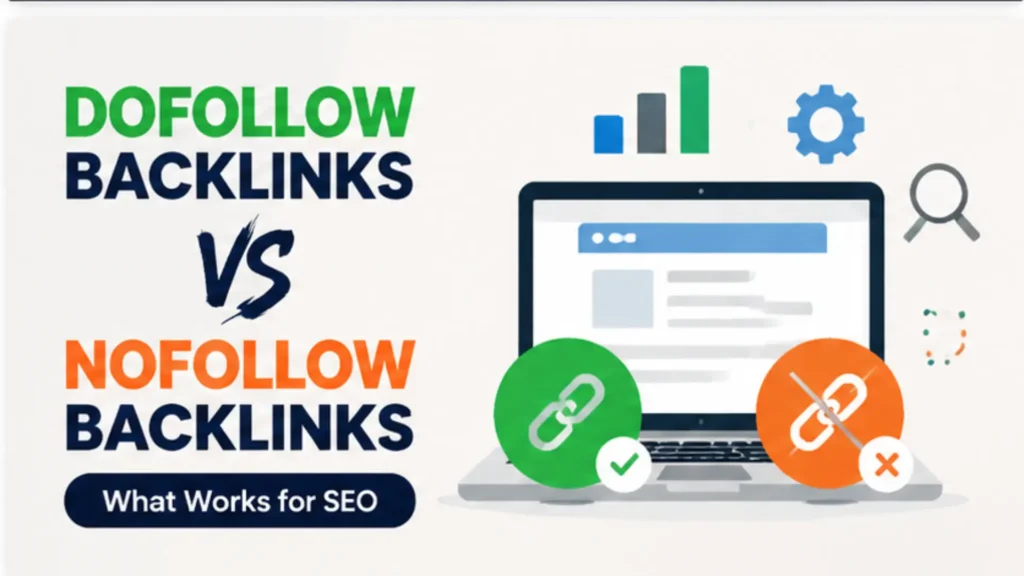
A dofollow backlink allows search engines to follow the link and pass authority from one website to another. This helps improve rankings and is a key element of any off-page SEO strategy.
A nofollow backlink contains a special attribute that tells search engines not to pass authority in the traditional way.
Quick Breakdown
- Dofollow backlinks pass link equity and boost rankings
- Nofollow backlinks do not pass full link equity
- Dofollow links are used for trusted references
- Nofollow links are often used for user generated or sponsored content
Even though dofollow links are more powerful for rankings, ignoring nofollow links is a mistake.
Which Is Better for SEO: Dofollow or Nofollow Backlinks?
If your goal is higher rankings, dofollow backlinks are more impactful. They help search engines trust your website and improve your position in search results.
But SEO is not just about rankings. It is about building a strong and natural presence.
When Dofollow Backlinks Matter Most
- Ranking for competitive keywords
- Increasing domain authority
- Building topical authority in your niche
When Nofollow Backlinks Are Valuable
- Driving referral traffic
- Getting exposure on high authority platforms
- Making your backlink profile look natural
A smart SEO strategy always includes both.
What Are Dofollow Backlinks?
Dofollow backlinks are the default type of links. If a link does not have any special attribute, it is automatically dofollow.
These links pass authority, also known as link juice, from one website to another.
How Dofollow Links Work
When a high quality website links to your content, search engines see it as a vote of confidence. This improves your credibility and rankings.
The value of a dofollow backlink depends on:
- The authority of the linking website
- The relevance of the content
- The anchor text used
SEO Benefits of Dofollow Backlinks
- Higher rankings in search engines
- Improved domain authority
- Better crawling and indexing
- Increased organic traffic
This is why most SEO campaigns prioritize earning high quality dofollow links.
What Are Nofollow Backlinks?
Nofollow backlinks include a rel attribute that signals search engines not to pass authority in the usual way.
They were originally introduced to reduce spam, especially in comments and forums.
How Nofollow Links Work Today
Google now treats nofollow links as a hint instead of a strict rule. This means they can still influence SEO indirectly.
Search engines may use these links for:
- Discovering new pages
- Understanding content relationships
- Evaluating overall trust signals
Benefits of Nofollow Backlinks
- Referral traffic from real users
- Increased brand visibility
- Natural backlink profile
- Indirect SEO value
A nofollow link from a popular site can still bring real results.
Dofollow Backlinks vs Nofollow Backlinks: Side by Side Comparison
Here is a simple comparison to make things clear.
Dofollow Backlinks
- Pass authority
- Directly impact rankings
- Found in editorial content
- High SEO value
Nofollow Backlinks
- Do not pass full authority
- Indirect impact on SEO
- Found in comments, forums, and sponsored content
- Valuable for traffic and diversity
Both types serve different roles in your SEO strategy.
How Google Treats Dofollow and Nofollow Links
Google looks beyond just link type. It evaluates the overall quality and relevance of the link.
There are also additional attributes like:
- rel=”ugc” for user generated content
- rel=”sponsored” for paid links
What Matters More Than Link Type
- Relevance of the linking page
- Authority of the domain
- Placement of the link
- Natural anchor text
A high quality nofollow link can sometimes be more useful than a weak dofollow link.
Why You Need Both Dofollow and Nofollow Backlinks
A natural backlink profile includes a mix of both link types.
If your website only has dofollow backlinks, it can look manipulated. If it only has nofollow links, it will struggle to rank.
Ideal Backlink Strategy
- Build a mix of dofollow and nofollow links
- Focus on relevance and quality
- Avoid spammy link building tactics
- Grow links consistently over time
Risks of an Unbalanced Profile
- Lower trust signals
- Poor rankings
- Potential penalties
Balance is the key to long term SEO success.
How to Check Dofollow vs Nofollow Backlinks
You can easily identify the type of a backlink.
Manual Method
- Right click on a webpage
- Select inspect
- Check for rel=”nofollow” in the link
If the attribute is not present, it is a dofollow link.
Using SEO Tools
Tools like the following can help:
- Ahrefs
- SEMrush
- Moz
They provide detailed backlink analysis including link type, anchor text, and authority.
How to Build Dofollow and Nofollow Backlinks
Building backlinks requires a clear and consistent strategy.
Ways to Get Dofollow Backlinks
- Guest posting on niche websites
- Creating high quality content that attracts links
- Outreach to bloggers and publishers
- Broken link building
- Digital PR SEO campaigns (e.g., leveraging media coverage for backlinks)
Ways to Get Nofollow Backlinks
- Social media sharing
- Blog commenting
- Participating in forums
- Submitting to directories
- Answering questions on platforms
Each method plays a role in strengthening your SEO.
Examples of Dofollow Backlinks
Understanding real examples helps you identify opportunities.
Editorial Links
- A blog links to your article as a reference
- These are usually dofollow and highly valuable
Guest Post Links
- You publish content on another site with a link back to your website
- Common and effective for SEO
Resource Page Links
- Your website is listed as a useful resource
- Often curated and trusted
Brand Mentions
- A website mentions your brand and links to your site
- Strong for authority building
Examples of Nofollow Backlinks
Nofollow backlinks are everywhere and still useful.
Blog Comments
- Links added in comment sections
- Usually marked as nofollow
Forum Links
- Links shared in discussions
- Good for niche traffic
Social Media Links
- Links from platforms like Facebook or LinkedIn
- Great for visibility and engagement
Sponsored Links
- Paid or affiliate links
- Should be marked as nofollow or sponsored
Best Practices for Using Backlinks
To get the best results, follow these guidelines.
Use Nofollow Links When
- Linking to sponsored or affiliate content
- Allowing user generated content
- You do not fully trust the source
Use Dofollow Links When
- Linking to high quality and trusted websites
- Providing valuable references
- Creating editorial content
Always focus on adding value for users.
conclusion: Dofollow Backlinks vs Nofollow Backlinks
Dofollow backlinks are key for improving rankings because they pass authority and help search engines trust your website. Nofollow backlinks may not pass full link equity, but they still bring traffic, build brand visibility, and keep your backlink profile natural.
The best approach is to use both in a balanced way. Focus on earning high quality, relevant links that provide real value to users, and your SEO will grow steadily over time.
FAQs About Dofollow Backlinks vs Nofollow Backlinks
What is a nofollow backlink?
A nofollow backlink is a link that includes a rel=”nofollow” attribute, which tells search engines not to pass full SEO authority to the linked page. It is commonly used for comments, sponsored content, and user generated links. While it does not directly boost rankings, it helps maintain a natural and trustworthy link profile.
Do nofollow backlinks help SEO?
Yes, nofollow backlinks do contribute to SEO in indirect ways. They can drive targeted referral traffic, increase brand visibility, and improve link diversity. Search engines also treat them as hints, which means they can still play a role in how your site is discovered and evaluated.
What is a dofollow backlink?
A dofollow backlink is a standard link that allows search engines to follow it and pass link equity to the destination page. These links act as a signal of trust and authority, helping improve rankings, domain strength, and overall visibility in search results.
When should you use nofollow links?
You should use nofollow links when linking to sponsored content, affiliate links, or user generated content such as comments and forums. It is also useful when you are linking to a site that you do not fully trust, helping you stay compliant with Google guidelines and avoid SEO risks.
How can I check if a link is dofollow or nofollow?
You can check a link by inspecting its HTML code in your browser. If you see rel=”nofollow”, it is a nofollow link. If there is no such attribute, it is a dofollow link. For deeper analysis, SEO tools like Ahrefs, SEMrush, or Moz can help you analyze backlinks in bulk.
What is the ideal ratio of dofollow vs nofollow backlinks?
There is no fixed ratio that works for every website. A natural backlink profile includes a healthy mix of both types. The focus should always be on quality, relevance, and earning links from trusted sources rather.