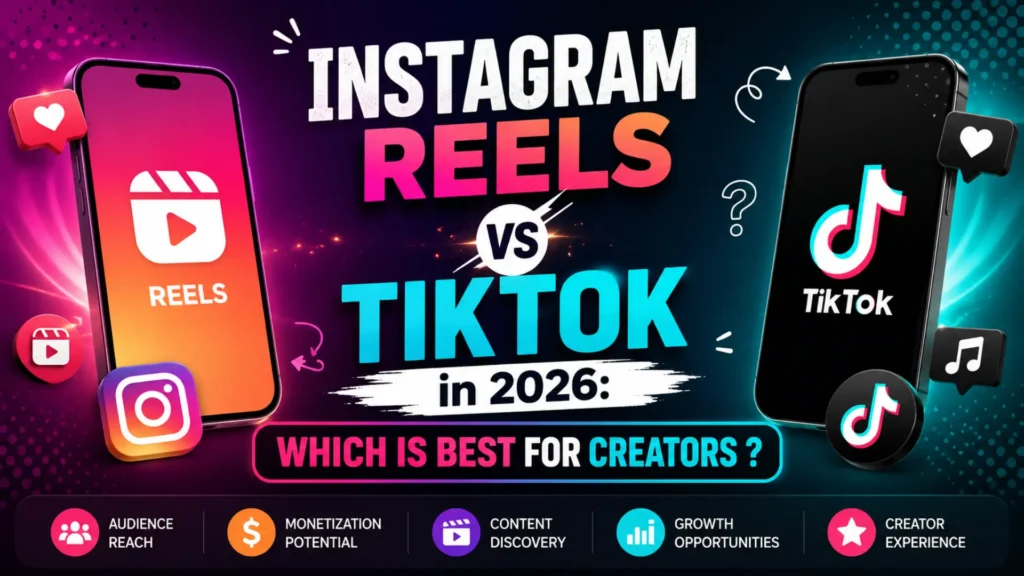
Short-form video content has become a dominant format for creators and brands to connect with their audience, but the decision of which platform to focus on, Instagram Reels vs TikTok, can be challenging. Both platforms offer strong opportunities for growth, engagement, and monetization, but which one is best for your content strategy in 2026? With varying features, algorithms, and audience types, choosing the right platform can make or break your success.
In this guide, we will compare Instagram Reels and TikTok, and also take a look at YouTube Shorts, exploring key factors such as user base, video length, engagement, monetization, and discovery algorithms. We will also share real-world examples to help you make an informed decision and choose the platform that aligns with your goals..
Instagram Reels vs TikTok Popularity: A Snapshot
TikTok:
TikTok is a global powerhouse with over 1 billion active users. Its rise has been nothing short of phenomenal, with the app continuously pushing the boundaries of creativity and entertainment. The algorithm helps even small creators get massive visibility, contributing to viral trends and challenges that reach millions of users worldwide. With TikTok, the emphasis is on fast-paced, shareable content that resonates with younger audiences, particularly Gen Z.
Instagram Reels:
Instagram Reels, which launched in 2020, has become Instagram’s answer to TikTok. With 2 billion+ active users, Instagram Reels benefits from its seamless integration with Instagram’s broader ecosystem. Reels offers content creators a way to share short videos with an established following and gain exposure through Instagram’s Explore page. Unlike TikTok, Instagram caters to a more diverse age group, but its growth in short-form video content has been a direct response to TikTok’s success.
Instagram Reels vs TikTok vs YouTube Shorts: Which is the Best Option?
If you’re wondering how Instagram Reels, TikTok, and YouTube Shorts stack up against each other, here’s a breakdown of what makes each platform unique:
| Metric | Instagram Reels | TikTok | YouTube Shorts |
| Active Users (2026) | 2 billion+ | 1 billion+ | 2 billion+ |
| Video Length | 15-90 seconds | 15-60 seconds | 15-60 seconds |
| Engagement Rate | 1.22% (average for posts) | 5% (average for posts) | 1.1% (average for posts) |
| Monetization | Ads, Affiliate Marketing | Creator Fund, Ads | Partner Program, Ads |
| Discovery Algorithm | Explore Page | For You Page | Subscription-based, Trending |
| Business Features | Shopping, Affiliate Marketing | In-App Shopping, Creator Fund | Super Chats, Sponsored Shorts |
| Top Countries | US, India, Brazil, UK | US, India, Brazil, Indonesia | US, India, Brazil |
Key Takeaways:
- TikTok is the winner when it comes to engagement and viral potential, especially for creators who want to reach a new audience.
- Instagram Reels excels for businesses and creators who already have an established following on Instagram and prefer staying within the platform’s ecosystem.
- YouTube Shorts provides a solid monetization path through its Partner Program and leverages YouTube’s searchability and discoverability, making it a great choice for those already invested in YouTube.
How to Earn from TikTok, YouTube, and Instagram
Earning money on social media platforms like TikTok, YouTube, and Instagram is increasingly accessible. Here’s a breakdown of how creators can monetize their content on each platform:
TikTok:
- TikTok Creator Fund: Get paid based on video views and engagement. The payout can range from 2-4 cents per 1,000 views, but this can vary.
- Brand Partnerships: Collaborate with brands for sponsored content or product placements.
- Live Gifts: Receive virtual gifts from fans during live streams, which can be converted into real money.
- Affiliate Marketing: Promote products through affiliate links and earn commissions on sales.
- TikTok Ads: TikTok offers in-app ads, where creators can earn revenue through ad shares.
YouTube:
- YouTube Partner Program: Monetize videos through ads. Creators earn a share of ad revenue, typically ranging from $1 to $4 per 1,000 views (CPM varies).
- Super Chats & Memberships: Earn money through fan donations during live streams or by offering exclusive content via channel memberships.
- YouTube Shorts Fund: YouTube pays creators through its Shorts Fund, with $0.01-$0.02 per view, increasing with viral content.
- Brand Deals & Sponsorships: Partner with brands for sponsored videos or product placements.
- Merchandise Shelf: Creators can sell merchandise directly through YouTube’s integration with merch platforms like Teespring.
Instagram:
- Sponsored Posts: Work with brands to post sponsored content, earning fees based on follower count and engagement.
- Instagram Ads: Run ads on your own content through Instagram’s platform and earn from clicks and views.
- Affiliate Marketing: Share affiliate links in Stories or posts and earn commissions on sales made through your links.
- Instagram Shopping: Set up an online store directly on Instagram and sell products directly to your followers.
- Badges in Live: Fans can buy badges during Instagram live streams to support creators, which provides direct earnings.
TikTok vs Instagram Reels Algorithm: How Do They Compare?
Both Instagram Reels and TikTok have powerful algorithms designed to help creators get discovered, but they function in slightly different ways.
Instagram Reels Algorithm:
Instagram’s algorithm focuses on content that aligns with users’ interests, based on their interactions within Instagram. The key factors include:
- User Engagement: Likes, shares, saves, and comments all influence how widely a Reel is shown.
- Hashtags & Metadata: Reels with relevant and popular hashtags are likely to appear in more feeds.
- Content Type: The more engagement a Reel receives, the more likely it is to show up in the Explore page.
TikTok Algorithm:
TikTok’s For You Page (FYP) is one of its most powerful features, giving new users a chance to go viral. The algorithm is driven by:
- User Interactions: TikTok prioritizes likes, shares, comments, and video rewatches.
- Video Information: Captions, hashtags, and audio choices all play a role in discoverability.
- Device Settings: TikTok considers location and language preference when recommending videos.
Comparison:
TikTok’s algorithm is more focused on viral reach and allows creators to gain exposure to a wider audience, even if they have zero followers. Instagram Reels, on the other hand, works best for creators who already have an established following and are looking to expand their reach within the Instagram ecosystem.
Does Timing Matter for Engagement on TikTok and Instagram Reels?
Yes, timing plays a crucial role in increasing engagement on both TikTok and Instagram Reels. Posting at peak times helps your content reach a larger audience, boosting your chances of being featured on the For You Page (TikTok) or Explore Page (Instagram). Understanding when your audience is most active can significantly impact your video’s performance. To maximize your engagement on TikTok, it’s essential to post at the best time to post on TikTok. Posting during peak times can increase your chances of being featured on the For You Page. Similarly, to boost your engagement on Instagram Reels, check out the best time to post on Instagram to reach a larger audience.
Examples of Creator Performance: Instagram Reels vs TikTok
Let’s take a look at two creators who have experienced success on both platforms:
- Emily Smith (Fashion Influencer):
- Instagram Reels: Emily has 200K followers on Instagram. Her Reels average around 50K views with strong engagement from her established audience.
- TikTok: Emily posted a fashion haul video on TikTok, which went viral, racking up 2 million views and attracting a completely new audience.
- Takeaway: While Emily’s Reels are well-received by her followers, TikTok’s viral nature allowed her to reach a far larger audience.
- Instagram Reels: Emily has 200K followers on Instagram. Her Reels average around 50K views with strong engagement from her established audience.
- John Doe (Comedian):
- Instagram Reels: John has 50K followers, and his Reels get around 5K views per video.
- TikTok: John posted a comedy skit on TikTok, which went viral and garnered over 5 million views.
- Takeaway: John’s TikTok content reached millions thanks to the platform’s ability to push viral content to a wide audience.
- Instagram Reels: John has 50K followers, and his Reels get around 5K views per video.
FAQs: Instagram Reels vs TikTok vs YouTube Shorts
1. How does TikTok’s Creator Fund work?
- TikTok’s Creator Fund pays creators based on video performance, including views and engagement. The payment typically ranges from 2-4 cents per 1,000 views. The fund aims to reward creators for their content’s popularity but varies depending on the creator’s engagement and TikTok’s available budget.
2. Can Instagram Reels be monetized through ads?
- Yes, Instagram Reels can be monetized through ads. Creators can earn revenue via Instagram’s ad system by allowing ads to run on their Reels. Businesses can also use Reels for sponsored posts, offering additional earning opportunities based on engagement and audience targeting.
3. Is YouTube Shorts monetized differently from regular YouTube videos?
- Yes, YouTube Shorts has its own monetization system separate from regular YouTube videos. Shorts Fund provides payments based on views and engagement, but traditional YouTube ads are not available for Shorts unless the creator is part of the regular YouTube Partner Program.
4. Can creators use affiliate marketing on TikTok and Instagram Reels?
- Yes, both TikTok and Instagram Reels allow creators to integrate affiliate links within their content. Creators can earn a commission from sales generated through these links. This is a popular method for monetizing content on both platforms, especially with brand collaborations.
5. What are the best strategies for businesses on TikTok, Instagram Reels, and YouTube Shorts?
- For businesses, TikTok excels in viral marketing and engaging younger audiences with trends and challenges. Instagram Reels works well for businesses already on Instagram, offering integrated shopping and affiliate marketing. YouTube Shorts is ideal for brands with existing YouTube channels, using short, high-quality content to engage viewers and drive traffic to other business offerings.
Conclusion: Instagram Reels vs TikTok – Which One Wins?
The ultimate choice between Instagram Reels vs TikTok depends on your goals:
- For Content Creators: If you already have a strong presence on Instagram and want to leverage your existing followers, Instagram Reels is a great option. However, if you want to go viral and tap into a broader, younger audience, TikTok is your best bet.
- For Businesses: Businesses looking to market to an established audience might prefer Instagram Reels. But if you want to create viral campaigns and engage with a larger audience, TikTok offers unmatched reach and engagement potential.
Instagram Reels vs TikTok vs YouTube Shorts: Each platform has unique advantages depending on your objectives. TikTok offers viral reach, Instagram Reels benefits from Instagram’s established user base, and YouTube Shorts is a solid choice for creators already invested in YouTube.